
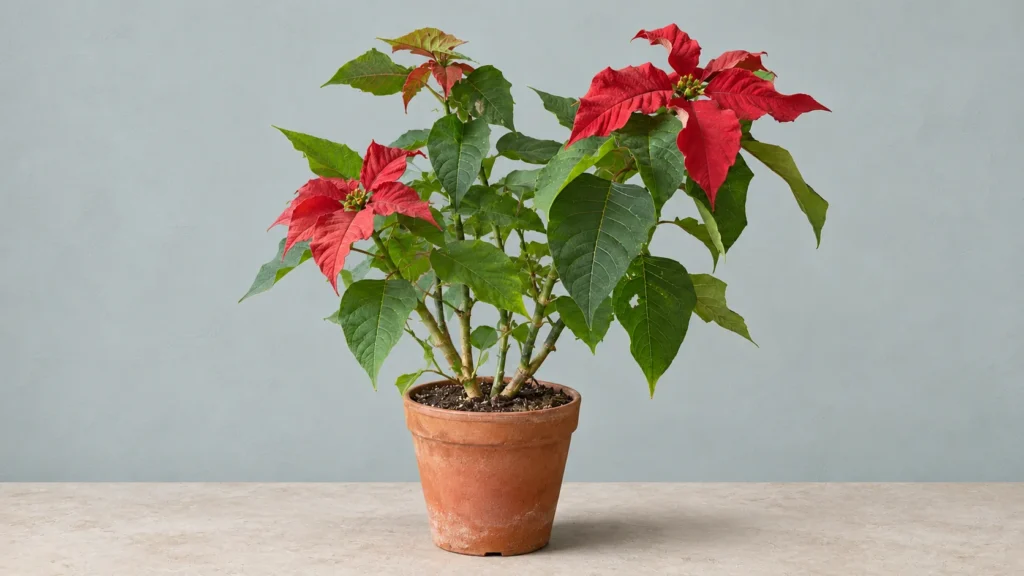
Poinsettia
Euphorbia pulcherrima
A tropical shrub whose red, pink, or cream bracts surround tiny yellow flowers and brighten winter rooms.
Watering frequency
Water when the upper layer of mix feels dry; drain thoroughly
Ideal temperature
About 65-75°F / 18-24°C indoors; protect from cold drafts
Humidity
Average indoor humidity; avoid very hot, dry air
Care difficulty
Medium
Air purifying
No/Not Known
Growth rate
Moderate
Plant size
Compact holiday plants; unpruned mature shrubs can become much larger
Soil type
Loose, well-draining indoor potting mix
Fertilizer need
Feed lightly during active spring and summer growth; do not feed a stressed plant.
Care summary
- Light: Bright light, with protection from harsh midday sun.
- Water: Check the potting mix and drain excess water after each watering.
- Temperature: Keep away from chilly doors, cold glass, and heat vents.
- Display: The colored parts are bracts around small true flowers.
- Recoloring: Long, uninterrupted nights are needed before the next winter display.
- Safety: Irritating milky sap; keep away from pets and children.
Common problems
- Wilting with wet soil: check roots and drainage before adding water.
- Sudden leaf drop: investigate cold exposure, drafts, or a sharp change in conditions.
- Crispy bract edges: check for heat, dry soil, or direct contact with cold glass.
- Green new leaves next winter: the plant has not received sufficiently long, uninterrupted nights.
Plant care guide
About Poinsettia
Poinsettia (Euphorbia pulcherrima) is a shrub in the spurge family, Euphorbiaceae. It is native from Mexico to Guatemala, according to Kew's taxonomic record. The familiar red display is mostly made of modified leaves called bracts. Look at their center to find the much smaller, yellowish true flowers. Bracts can also be pink, cream, white, or patterned in cultivated plants.
This species is commonly bought as a short-lived holiday decoration, but it can be kept as a living houseplant. Expect it to look different as it grows: a commercially produced, compact plant may become taller and more open the following year. Keeping it healthy is fairly straightforward; getting a precisely timed repeat display takes more planning. The RHS poinsettia guide separates ordinary care from the long-night treatment needed for colored bracts.
Why You'll Like It
Poinsettia brings strong color to a room when many other flowering houseplants are quiet. Its color lasts longer than a single flower because the bracts remain attractive around the small flowers. A healthy plant also makes a useful lesson in plant biology: leaves, bracts, and flowers are visible together.
Choose it for a bright, comfortable room where you can check the soil. It is less suitable for a freezing entryway or a shelf directly above a radiator. If you have curious pets, use a location they cannot reach; the plant's milky sap and foliage can irritate them.
How to Identify Poinsettia
The leaves are broad and pointed, often with shallow lobes. Colored bracts cluster at the tips of the shoots around tiny yellow flowers. The stems are woody as the plant ages. A broken stem or leaf stalk releases white latex, a trait shared with many Euphorbia species. Do not test this deliberately: the sap can irritate skin and eyes.
There are many cultivated colors and forms. Red, pink, white, speckled, and double-looking displays are typically horticultural selections of E. pulcherrima, not separate species merely because their bracts differ. A cultivar name should come from a reliable plant label or grower, not color alone.
Where It Works Best
Give the plant a bright position away from chilly doors, cold windows, and blasts of heated air. A bright east-facing window is often practical. Near a south-facing window, watch for overheated glass and harsh sun, particularly when a shop-grown plant is moved suddenly into stronger light. The RHS growing advice recommends good light and protection from cold and draughts.
Remove or open decorative foil before watering so water cannot collect around the nursery pot. A cachepot is fine if you lift the inner pot out to drain and empty any water left at the bottom.
Poinsettia Care
Light. Provide bright light for healthy foliage. Rotate the pot occasionally if growth leans toward a window. Do not place it in a dark corner and expect the original bracts to stay vivid indefinitely. Acclimate a plant to stronger sun gradually.
Water. Feel the mix instead of watering on a calendar. When the surface has started to dry, water the root ball evenly and let the excess escape. Avoid both a constantly wet pot and a pot that becomes bone dry for days. Sudden wilting can mean thirst, but wilting in wet soil can signal root damage; check before watering again.
Soil and pot. A loose indoor mix and a drainage hole are more useful than a special holiday fertilizer. If keeping the plant past its display season, repot only when roots need more space, usually after growth resumes. Move up one pot size rather than placing a small root system in a large mass of damp mix.
Temperature and humidity. Aim for ordinary warm indoor conditions. Keep it away from cold drafts and freezing temperatures. Average room humidity is usually workable, although a heat vent can dry the plant rapidly. Do not mist bracts as a substitute for watering the roots.
Feeding and pruning. Feed lightly when new growth is active in spring and summer. Do not fertilize a struggling plant to fix wet roots or low light. After the colored display declines, the stems may be cut back to encourage a bushier shape. Wear gloves, avoid getting sap in your eyes, and wash tools and hands afterward.
How to Encourage Color Again
Poinsettia is a short-day plant: long, uninterrupted nights signal bract development. In early autumn, growers typically give it a long dark period each day for several weeks while maintaining good light during the day. Even brief artificial light during the dark period can interfere. The RHS describes this process and notes that repeat flowering is possible but takes attention.
Do not confuse this with keeping the plant dark all day. It still needs daytime light and normal care. A plant that remains green can be perfectly healthy; the missing holiday color is a timing issue, not necessarily a watering failure.
Propagation and Repotting
Stem cuttings can be taken during active growth. Wear gloves, let the latex stop flowing, and handle cuttings away from eyes and pets. Root in a suitable free-draining medium in warm, bright indirect light. If you only want one holiday plant, it is simpler to maintain the original specimen than to propagate it.
When repotting, inspect roots, remove only dead material, and keep the crown at its previous depth. A heavy decorative sleeve can conceal soggy soil, so check the actual nursery pot rather than judging by its outer wrapping.
Is Poinsettia Safe for Pets?
No. The ASPCA lists poinsettia as toxic to dogs and cats: its sap can irritate the mouth and stomach, with vomiting sometimes reported. The same source says its reputation for extreme toxicity is overstated. This nuance matters, but it is not a reason to let a pet chew it. Keep plants and fallen leaves out of reach, and contact a veterinarian if an animal has symptoms after eating it. Wash exposed skin after handling broken stems; seek prompt medical advice for eye exposure.
Common Problems
- Leaves drop soon after purchase: Check for cold exposure during transport, a draft, a heater, or a drastic change in light. Stabilize conditions and assess soil moisture.
- Plant wilts despite wet soil: Roots may be stressed by water sitting in an outer pot. Drain it and inspect the root system if the problem persists.
- Brown, dry edges: Check for hot, dry air, missed watering, or leaves touching cold glass.
- No red bracts the following winter: The plant likely lacked consistently long nights. Maintain good daytime light and follow a controlled dark-period schedule the next autumn.
Frequently Asked Questions
Are the red parts flowers? No. They are bracts surrounding much smaller true flowers.
Can I keep a poinsettia after the holidays? Yes. Give it light, moderate watering, and warm conditions. It may grow taller and will need a long-night treatment to color again.
Is a white poinsettia a different species? Usually no. Bract color alone does not establish a different species or identify a specific cultivar.
Is poinsettia a cactus? No. It is a woody spurge, though it shares the genus Euphorbia with several succulent plants.
Poinsettia rewards steady care even when a second holiday display is not the goal. Prioritize a comfortable bright position, reliable drainage, and safe handling of its sap.