
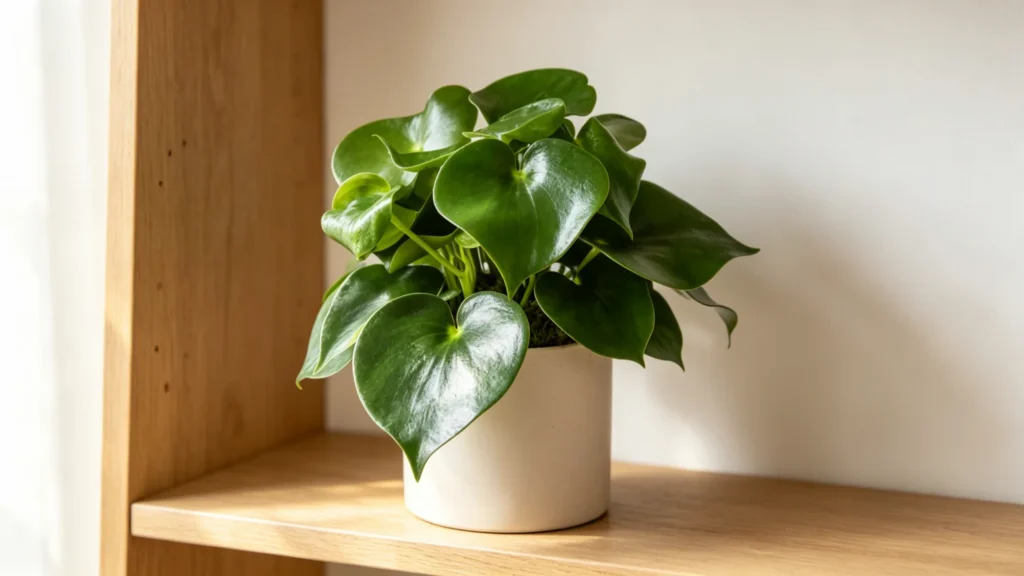
Raindrop Peperomia
Peperomia polybotrya
A compact peperomia with glossy, teardrop-shaped leaves on upright stems, often mistaken for a Chinese money plant and easy to grow in bright indirect light.
Watering frequency
Check weekly; water after the top 2-3 cm dries
Ideal temperature
60-80°F / 16-27°C
Humidity
40-60%
Care difficulty
Easy
Air purifying
No/Not Known
Growth rate
Moderate
Plant size
Compact indoor plants around 8-12 in / 20-30 cm tall
Soil type
Light, well-draining houseplant mix with perlite
Fertilizer need
Every 4-6 weeks, spring-early fall.
Care summary
- Light: Bright indirect light; keep out of hot direct sun.
- Water: Let the top 2-3 cm dry; check deeper mix is not saturated.
- Soil: Use a light, well-draining mix with perlite.
- Humidity: Average room humidity is fine.
- Growth: Pinch growing tips occasionally to keep the plant full.
- Safety: Pet safe by same-genus inference; not individually tested.
Common problems
- Drooping or soft leaves: overwatering or root rot.
- Pale or stretched growth: too little light.
- Wrinkled or wilted leaves: check dry soil versus wet, damaged roots.
- Mealybugs: inspect leaf axils and stem joints.
- Leggy stems: pinch growing tips to encourage fullness.
Plant care guide
About Raindrop Peperomia
Raindrop Peperomia (Peperomia polybotrya) is a compact succulent-stemmed houseplant in the Piperaceae family, native to the tropical forests of South America, including Colombia and Peru. It is grown for its glossy, fleshy, teardrop- or coin-shaped leaves that emerge upright on slender stems, each leaf ending in a delicate drip-tip. The thick, bright emerald leaves and neat, bushy form make it one of the most popular peperomias in the trade.
The accepted botanical name is Peperomia polybotrya. Common names include Raindrop Peperomia, Raindrop Plant, Coin Leaf Peperomia, Coin Peperomia, and Jayde Peperomia; the raindrop and coin names describe its foliage, while Jayde is another retail name you may encounter. Because its round leaves resemble the unrelated Chinese money plant, the two are frequently confused, and telling them apart is one of the most useful identification notes for buyers.
Why You'll Like It
Raindrop Peperomia has a clean, modern look that fits a desk, shelf, or kitchen counter. The glossy, coin-shaped leaves are thick and fleshy, so the plant reads as sculptural even when small, and its compact upright habit is easy to accommodate. It is also genuinely low-effort: it tolerates average room conditions, does not need high humidity, and can go a while between waterings.
It is one of the friendliest peperomias for beginners. It grows at a steady pace, stays tidy with occasional pinching, and rarely suffers serious problems as long as it is not overwatered. Its small size and neat shape also make it a good first plant for a home office or bathroom shelf.
The tradeoff is that it is not a plant for strong direct sun, and its thick leaves store water, so the main risk is overwatering rather than neglect. It is also easy to buy thinking you are getting a Chinese money plant, so it is worth checking the leaf shape before you commit.
What Kind of Plant Is It?
Raindrop Peperomia is a compact, upright herbaceous plant with thick, succulent stems and fleshy leaves. Each leaf is broad and rounded with a pointed drip-tip, and attaches to the stem near the center of the leaf blade, a trait called peltate attachment. The leaves are glossy, solid emerald green, and somewhat cupped, with a shallow hollow where the leaf meets the petiole.
It is easy to confuse with the unrelated Chinese money plant (Pilea peperomioides), which belongs to Urticaceae rather than the peperomia's Piperaceae family. The quickest difference is the leaf: a raindrop peperomia leaf ends in a clear drip-tip and is cupped toward the stem, while a Chinese money plant leaf is flatter and more uniformly round. The Chinese money plant also grows from a central trunk with a different habit, and the two are not interchangeable in care.
History of Raindrop Peperomia
Kew's Peperomia polybotrya record places its native range from Colombia to Peru and records its first publication in 1816. Its resemblance to Pilea peperomioides is a useful comparison for shoppers, not evidence that they are the same kind of plant.
The plant entered the ornamental trade as a durable, compact foliage plant and has become widely available in recent decades, sold under the names Raindrop, Coin Leaf, and Jayde Peperomia. Its resemblance to the Chinese money plant has helped drive its popularity, since many buyers seek out the round-leaf look but want a plant that is even more forgiving and compact than a Pilea.
Popular Varieties and Related Plants
Raindrop Peperomia belongs to a genus with many ornamental species, several of which are covered in this plant database.
- Chinese Money Plant (Pilea peperomioides): The plant most often confused with the Raindrop Peperomia; it has flatter, rounder leaves and is a different genus.
- Watermelon Peperomia (Peperomia argyreia): A compact rosette with silver-striped leaves, a very different look from the solid green raindrop.
- Emerald Ripple Peperomia (Peperomia caperata): A deeply textured, crinkled-leaf peperomia in the same genus.
- Baby Rubber Plant (Peperomia obtusifolia): A round-leafed, upright peperomia with thicker, waxier leaves.
The peperomias are related, while Chinese Money Plant is included as a lookalike from a different family. Match care to each plant rather than treating round leaves as a shared identity.
Where Raindrop Peperomia Works Best
Give Raindrop Peperomia bright indirect light. A position near an east or north window, or a spot a short distance from a brighter window, suits it well. It tolerates lower light than many houseplants, but very dark corners cause stretched, pale growth, and hot direct sun can scorch the leaves.
A bright living room, home office, or kitchen counter is ideal. It does well at ordinary room humidity, so a normal household environment is fine, and it is small enough for a desk or shelf.
Raindrop Peperomia Care
Light
Provide bright indirect light. Raindrop Peperomia grows best in medium to bright filtered light and can cope with lower light than many houseplants. Avoid hot direct sun, which scorches the thick leaves, and avoid deep shade, which causes pale, stretched growth. An east or north window, or a spot set back from a south or west window, works well.
Watering
Water after the top 2–3 cm, about an inch, of mix has dried and the deeper root zone is no longer saturated. A weekly check is a useful reminder; when water is needed, wet the root ball thoroughly and drain. This partial dry-down approach follows the RHS peperomia care guidance. This plant stores water in its leaves and stems, so it tolerates the soil drying between waterings; soggy soil is the most common cause of failure. Reduce watering in fall and winter. Adjust the interval to your pot, light, and room rather than following a fixed calendar.
Soil and Container
Use a light, well-draining houseplant mix amended with perlite, so it holds some moisture but drains promptly and lets air reach the roots. Choose a pot with drainage holes and a size close to the root ball; an oversized pot stays wet too long. Repot only when roots fill the container.
Humidity
Raindrop Peperomia does fine at average household humidity and does not need a humidifier. It is a tropical plant but tolerates dry indoor air well, so a normal living room or office is fine. Higher humidity is welcome but not required.
Temperature
Keep temperatures roughly 60–80°F (16–27°C). Raindrop Peperomia is not cold-hardy and should be protected from frost and cold drafts. It tolerates normal indoor temperatures well and prefers a spot away from heating vents and air conditioners.
Fertilizer
Feed lightly every four to six weeks from spring through early fall during active growth with a diluted balanced houseplant fertilizer. Stop feeding in winter, and avoid feeding a stressed or recently repotted plant.
Pruning and Grooming
Raindrop Peperomia needs little pruning, but pinching the growing tips occasionally encourages a fuller, bushier plant. Remove any damaged or yellowing leaves with a clean cut. The stems are easy to break by accident, so handle the plant gently.
Propagating Raindrop Peperomia
Take cuttings in spring or early summer. For a stem cutting, cut below a node—the point where a leaf joins the main stem—and place that lower node in lightly moist, airy mix. A leaf cutting is different: it uses a healthy leaf and its petiole, or leaf stalk, rather than a section of the main stem. Keep the blade above the mix and expect new plantlets to take longer than a simple root appearing. Keep either method warm in bright indirect light, with light moisture rather than soggy soil; there is no need to impose a full day of callusing on every cutting.
Repotting Raindrop Peperomia
Repot in spring when roots fill the container or the mix breaks down, usually every two years or so. Choose a pot only slightly larger than the root ball, use fresh light mix, and keep the plant at approximately its previous depth. With healthy, intact roots, water to settle the fresh mix and drain well, then resume the normal soil-check routine. Avoid feeding immediately after repotting.
Toxicity and Pet Safety
Raindrop Peperomia is Pet safe in this database based on same-genus evidence. The ASPCA Baby Rubber Plant record lists the related Peperomia obtusifolia as non-toxic to cats and dogs. This supports a cautious comparison; it is not a species-specific test of Peperomia polybotrya or proof that every member of the genus has been assessed.
Keep pets from chewing the plant or digging in its potting mix, and keep fertilizers and treatments out of reach. If ingestion causes symptoms or the plant's identity is uncertain, contact a veterinarian for advice.
Common Problems and Practical Fixes
- Drooping or soft leaves: Usually overwatering or root rot. Let the mix dry out, improve drainage, and check the roots.
- No new growth: A winter slowdown is normal. For a spring or summer stall, check useful light, temperature, roots, mix, pests, and crowding before reaching for fertilizer or a larger pot.
- Pale or stretched growth: Too little light. Move the plant to brighter indirect light.
- Wrinkled or wilted leaves: Test the mix first. Water a genuinely dry root ball thoroughly and drain; if the soil is wet, inspect the roots instead of adding more water.
- Mealybugs: These can hide in the leaf axils and stem joints; inspect and treat with a product labeled for indoor plants.
- Leggy stems: Pinch the growing tips to encourage branching and a fuller plant.
Frequently Asked Questions
How do I tell it from a Chinese money plant? The Raindrop Peperomia leaf ends in a clear drip-tip and is cupped toward the stem, while a Chinese money plant leaf is flatter and more uniformly round. They belong to different genera.
Is it safe for pets? It is listed here as Pet safe using evidence from a documented same-genus relative, not an individual test of this species. Discourage chewing and seek veterinary advice if ingestion causes symptoms.
Does it need high humidity? No. It tolerates average household humidity and does not need a humidifier.
Why are the leaves drooping? Check the soil first. A dry, light pot may need water, while wet soil and soft leaf bases suggest a root or drainage problem. The same drooping symptom can have opposite watering causes.
Final Thought
Raindrop Peperomia is a glossy, compact plant that is easy to keep and easy to tell apart from the Chinese money plant once you know the leaf shape. Give it bright indirect light, a light well-draining mix, and water when the top of the soil dries, and it stays tidy on a desk or shelf for years. Its fleshy leaves store water, so when in doubt, err on the side of underwatering.