Houseplant Soil Explained: Drainage, Aeration, and Moisture
Identify the 5 most common houseplant pests — spider mites, mealybugs, fungus gnats, scale, and thrips — with clear symptoms, photos, and safe first-response treatment steps.
Every houseplant care guide eventually says some version of “use well-draining soil.” It is good advice, but it is also completely useless if you do not know what well-draining soil actually is, what to look for on a bag at the garden center, or whether the soil your plant is sitting in right now is part of the problem.
Soil is the foundation of your plant’s health. It holds water and nutrients, anchors the roots, and — most importantly — provides the air pockets that roots need to breathe. When soil fails at any of these jobs, the plant suffers no matter how carefully you water, fertilize, or prune.
Here’s what houseplant soil actually needs to do, what the common ingredients are and why they matter, how to choose a good bagged mix, and how to blend your own for specific plant types.
Why Houseplant Soil Is Different From Garden Soil
If you take one thing away from this guide, let it be this: do not use garden soil in a pot.
Garden soil is heavy, dense, and designed to stay in place outdoors where earthworms, weather, and plant roots work through it over time. In a container, garden soil compacts within weeks. The air pockets collapse, water cannot drain freely, and roots suffocate.
Houseplant soil — more accurately called potting mix — is engineered to stay light and airy in a confined container. Most modern potting mixes are soilless, meaning they contain no actual dirt. Instead, they are blends of organic materials like peat moss or coco coir, mineral amendments like perlite and vermiculite, and sometimes bark, charcoal, or compost.
A container-grown plant cannot extend its roots beyond the pot — it depends entirely on the quality of its potting medium for nutrients, water, and oxygen. The soil you choose is the entire world your plant lives in.
The Three Things Good Houseplant Soil Must Do
A quality potting mix balances three functions. When one dominates at the expense of the others, problems follow.
1. Drainage — Water Must Flow Through
Drainage means excess water exits the pot quickly after watering. When drainage is poor, water pools around the roots, blocking oxygen and creating the conditions for root rot. Good drainage is not about how often you water — it is about what happens to the water after it enters the pot.
Signs of poor drainage include water sitting on the soil surface for more than a few seconds, soil that stays visibly wet for five or more days after watering, and a sour or musty smell from the pot. Plants in poorly draining soil eventually develop root rot, even if you water sparingly.
Drainage is also why drainage holes are non-negotiable. Even the most perfectly engineered potting mix cannot drain if the water has nowhere to go. If your favorite decorative pot has no holes, use it as a cachepot — keep the plant in a plastic nursery pot with drainage inside the decorative outer pot.
2. Aeration — Roots Need Air Too
Roots respire. They take in oxygen and release carbon dioxide, just like the above-ground parts of the plant. When soil is compacted or waterlogged, the air spaces between soil particles fill with water instead of air, and roots literally suffocate.
Good aeration comes from materials that create permanent air pockets in the soil — perlite, orchid bark, and coarse sand are the most common. These materials do not break down quickly, so they maintain air spaces even as the organic components of the soil decompose over time.
Signs of poor aeration include soil that feels hard and dense when you press it, water that pools on the surface and absorbs very slowly, and roots that grow shallow and thin rather than deep and robust.
3. Moisture Retention — Not Too Wet, Not Too Dry
Soil also needs to hold some water. If it drains too quickly — like pure sand — the roots dry out between waterings and the plant cannot absorb enough moisture to sustain itself.
The moisture-retaining components of potting mix are the organic materials: peat moss, coco coir, and compost. These materials act like sponges, absorbing water and releasing it slowly as the plant needs it. The balance is crucial. Too much organic material without enough drainage amendment, and the soil stays wet and suffocating. Too much drainage material without enough organic matter, and the soil dries out within hours.
A good way to think about it: the ideal potting mix should feel like a wrung-out sponge — moist but not dripping, with visible air spaces throughout. This is a useful mental model to check your own soil against.
Common Houseplant Soil Ingredients
Knowing what is in your potting mix helps you choose the right one. Here are the ingredients you will see most often and what each one actually does.
| Ingredient | What It Does | Best For |
|---|---|---|
| Peat Moss | Holds moisture, light and fluffy, slightly acidic. Harvested from peat bogs — effective but environmentally controversial due to slow regeneration. | Most houseplants. Declining in use due to sustainability concerns. |
| Coco Coir | Similar water-holding capacity to peat but renewable and pH-neutral. Made from coconut husks. Compressed into bricks or sold loose. | Sustainable alternative to peat. Works for nearly all houseplants. |
| Perlite | Creates air pockets and improves drainage. Those white lightweight granules you see in potting mix — they are expanded volcanic glass. Does not break down or compact. | Almost every potting mix benefits from perlite. The single most important drainage amendment. |
| Vermiculite | Holds moisture and nutrients. Golden-brown flaky mineral that absorbs water like a sponge and releases it slowly. | Plants that prefer consistently moist soil: ferns, Calathea, Peace Lily. |
| Orchid Bark / Pine Bark | Creates large air pockets for excellent drainage and root aeration. Chunky texture. Breaks down slowly over one to two years. | Aroids (Monstera, Philodendron, Pothos), orchids, and epiphytes. |
| Horticultural Charcoal | Absorbs impurities and excess moisture. Prevents soil from souring and developing odors. | Terrariums, pots without drainage, and plants sensitive to root rot. |
| Worm Castings | Natural slow-release fertilizer and soil conditioner. Improves soil structure and adds beneficial microbes. | All-purpose nutrient amendment. Mix into any potting blend at roughly 10–20 percent. |
| Coarse Sand / Grit | Adds weight and sharp drainage. Prevents compaction in mixes that need to dry out quickly. | Cacti, succulents, Snake Plant, ZZ Plant. |
For more detailed guidance, there is a useful reference on selecting and adjusting commercial potting mixes for different plant groups.
How to Choose a Bagged Potting Mix
Walking into a garden center and facing a wall of potting soil options can feel overwhelming. Here is how to cut through the marketing and choose a good mix.
Look at the ingredients, not the claims. Flip the bag over and read the ingredient list. If you see perlite listed, that is a good sign — it means the manufacturer included drainage amendments. If you do not see perlite, vermiculite, bark, or sand anywhere on the list, the mix is likely mostly peat or coir with insufficient drainage.
Look for “for indoor plants” on the label. Mixes formulated for indoor containers are lighter and better-draining than all-purpose outdoor potting soils, which are often heavier and designed to retain moisture for outdoor plants in sun and wind.
Avoid “moisture control” crystals for most houseplants. Some mixes include water-absorbing polymer crystals designed to reduce watering frequency. While these can work for outdoor container plants, they often hold too much water for indoor conditions and can contribute to root rot in low-light or low-temperature environments.
Do the squeeze test. If you have the bag at home, take a handful of the mix and squeeze it firmly in your palm. When you open your hand, the soil should clump briefly and then crumble apart. If it stays in a tight wet ball, it is too dense for most houseplants. If it falls apart instantly without clumping at all, it may not retain enough moisture.
DIY Houseplant Soil Mix: Three Simple Recipes
Making your own potting mix gives you control over the exact balance of drainage, aeration, and moisture retention. It is also often cheaper than premium bagged mixes. Here are three recipes that cover the most common houseplant needs.
All-Purpose Mix
Suitable for most common foliage houseplants: Pothos, Philodendron, Spider Plant, Chinese Evergreen, Dracaena.
2 parts coco coir or peat moss
1 part perlite
1 part worm castings (optional, for nutrients)
This mix drains well while holding enough moisture that you will not need to water daily. It is forgiving — if you occasionally overwater, the perlite ensures the roots still have access to air.
Aroid Mix
Suitable for Monstera, Philodendron, Pothos, Anthurium, and other aroids that naturally grow on trees in the wild and need excellent root aeration.
1 part coco coir
1 part orchid bark (medium grade)
1 part perlite
Handful of horticultural charcoal
This mix has large air pockets that mimic the chunky, fast-draining conditions aroids experience in nature. Water runs through quickly, which means you will water more often — every five to seven days in growing season — but the roots will stay healthy and oxygenated.
Succulent and Cactus Mix
Suitable for Snake Plant, ZZ Plant, Aloe, Echeveria, Haworthia, and cacti of all kinds.
1 part standard potting mix or coco coir
1 part perlite
1 part coarse sand or poultry grit
This mix dries out within days and does not hold excess moisture around the roots. Succulents store water in their leaves and stems — they evolved for conditions where soil moisture is brief and infrequent. A dense, moisture-retentive mix is the fastest way to rot a succulent.
Different plant groups have different drainage and moisture needs — tailoring your mix to those requirements works better than using one blend for everything. If you grow plants with different soil needs, keeping two or three base mixes on hand — an all-purpose blend, a chunky aroid blend, and a gritty succulent blend — will serve you better than any one-size-fits-all product.
Signs Your Soil Is the Problem
Sometimes the plant is fine but the soil has degraded. Here are the signs that your potting mix needs attention.
Water sits on the surface and will not absorb. This usually means the soil has become compacted or hydrophobic. Compacted soil has collapsed air pockets. Hydrophobic soil — common in peat-based mixes that have been allowed to dry out completely — literally repels water at the molecular level. Bottom-watering can rehydrate hydrophobic soil temporarily, but if the problem keeps returning, it is time to repot with fresh mix.
Soil stays wet for more than five to seven days after watering. If your watering habits have not changed but the soil suddenly stays wet much longer, the organic components of the mix may have decomposed into a denser, slower-draining state. This is common in mixes that are more than a year old. Fresh potting mix restores proper drainage.
White crust on the soil surface. This is mineral and salt buildup from tap water or fertilizer. While a light crust is not immediately harmful, heavy buildup can burn roots over time. Flush the soil by running water through the pot for several minutes, allowing it to drain freely, or repot into fresh soil. Our brown tips guide covers how mineral buildup affects leaf health.
Soil pulls away from the pot edges. When soil shrinks away from the sides of the pot, it has become too dry and compacted. Water runs down the gap between the soil and pot without actually soaking the root ball. Bottom-watering is the best short-term fix, but if the soil has lost its structure, repotting is the longer-term solution.
Fungus gnats. Small black flies hovering around your plants are fungus gnats, and they are almost always a sign of soil that stays too wet. The larvae feed on organic matter and fungi in consistently moist soil. Letting the soil surface dry between waterings and adding a layer of coarse sand or fine gravel on top can break the breeding cycle. For persistent infestations, see our common houseplant pests guide.
When and How to Change Your Plant’s Soil
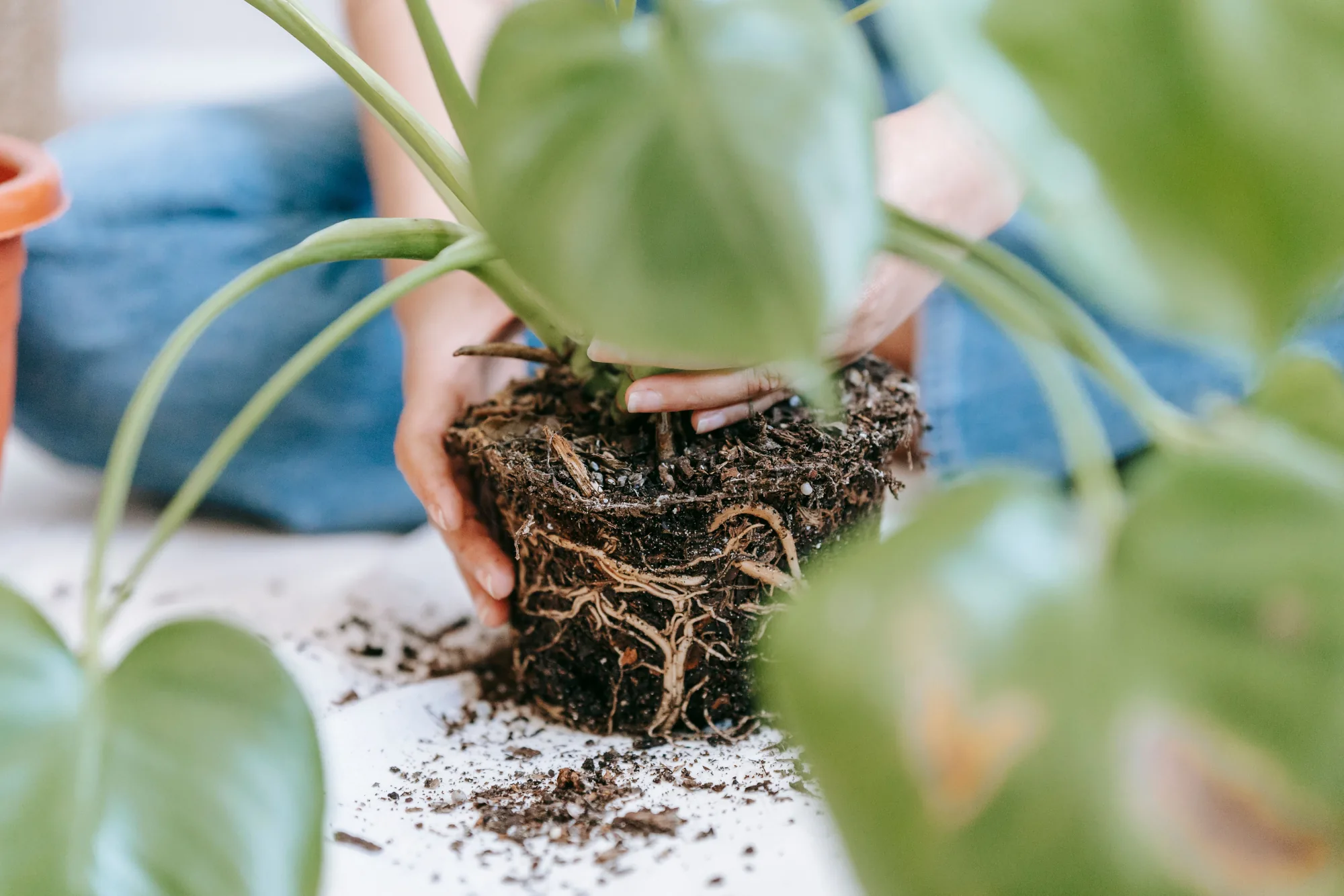
Most houseplants benefit from fresh soil every one to two years. Over time, the organic components of potting mix decompose. The soil structure collapses, nutrients deplete, and the mix becomes less effective at its three core jobs: draining, aerating, and retaining moisture at the right level.
Signs that fresh soil is needed include: the soil has visibly compacted and looks dense rather than fluffy, the plant’s growth has slowed noticeably during the growing season despite adequate light and water, or it has been more than two years since the last repotting.
When you repot, do not simply transfer old soil into the new pot. Gently shake or rinse away the old mix from the root ball and replace it entirely with fresh, well-draining potting mix. Detailed steps are in our repotting guide.
Can you reuse old potting soil? Generally, no. Old potting mix is depleted of nutrients, its structure has degraded, and it may harbor pathogens, fungal spores, or pest eggs. If you must reuse it, spread it on a baking sheet and bake at 90 degrees Celsius for 30 minutes to sterilize, then mix it 50/50 with fresh potting mix. For the cost and effort, fresh mix is almost always the better choice.
FAQ
What is the best soil for indoor plants?
A well-draining potting mix that contains perlite — look for mixes labeled “for indoor plants” or “for containers.” Avoid dense garden soil and heavy all-purpose outdoor mixes. An ideal mix should feel light and fluffy when you scoop it, not heavy and dense.
Can I use garden soil for houseplants?
No. Garden soil compacts in containers, drains poorly, and may contain pests, weed seeds, or pathogens that thrive in the warm indoor environment. Using garden soil in containers is actually one of the most common causes of houseplant pest and disease problems.
What is perlite and do I need it?
Perlite is a lightweight, porous volcanic mineral that creates air pockets and improves drainage in potting mix. It appears as small white granules. Yes, you need it or a similar drainage amendment — without perlite or an equivalent material like pumice or coarse sand, most bagged potting mixes are too dense and water-retentive for healthy root growth in containers.
How often should I change my houseplant’s soil?
Every one to two years for most plants. Fast-growing plants in small pots may need annual repotting with fresh soil. Slow-growing plants like Snake Plants and ZZ Plants can go two to three years. The best time to change soil is during the spring or early summer growing season.
What is the difference between potting soil and potting mix?
Potting soil may contain actual soil — mineral dirt from the ground — along with amendments. Potting mix is soilless, made from peat moss or coco coir plus perlite, bark, and other amendments. Potting mix is lighter, better-draining, and generally preferable for indoor container plants. Most products labeled “potting soil” for indoor use are actually soilless potting mixes — check the ingredient list to confirm.
Why Soil Matters More Than You Think
When your plant is in the right soil, watering is more forgiving, roots stay healthy, and the plant puts its energy into growing leaves instead of fighting stress. Most houseplant problems — overwatering, root rot, yellow leaves, slow growth — trace back at least partly to soil that is not doing its job.
If you are unsure whether your soil is helping or hurting, do the squeeze test. If the soil stays in a tight wet ball rather than crumbling apart, add perlite or repot into a lighter mix. It is one of the simplest changes you can make for your plants.
Want to find plants that match your home’s conditions — and your willingness to fuss over soil? Try the House Plant Finder quiz to discover indoor plants suited to the way you actually care for them.