
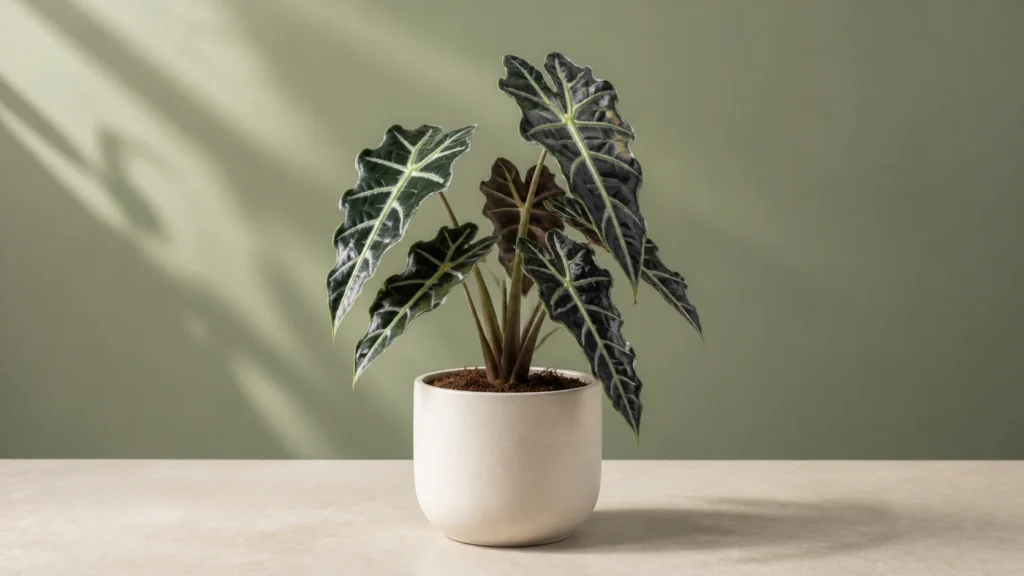
Alocasia Polly
Alocasia × amazonica 'Polly'
A compact Alocasia with dramatic dark arrow-shaped leaves and silver-white veins — a statement plant that rewards consistent humidity and steady hands.
Watering frequency
Every 7-10 days
Ideal temperature
65-80°F / 18-27°C
Humidity
60-80%
Care difficulty
Medium
Air purifying
No/Not Known
Growth rate
Moderate
Plant size
1-2 ft / 0.3-0.6 m
Soil type
Chunky, well-draining aroid mix
Fertilizer need
Monthly, spring-summer.
Care summary
- Light: Bright indirect light; never harsh direct sun.
- Water: Keep the soil evenly moist in summer; let the top inch dry between waterings.
- Humidity: Prefers 60%+ humidity; brown edges appear when air is dry.
- Soil: Chunky aroid mix with excellent drainage.
- Winter: Leaf drop is normal dormancy; water less and wait for spring.
- Safety: Not pet-safe; toxic if chewed.
Common problems
- Leaf drop in fall/winter: normal dormancy, not death — reduce watering and wait.
- Yellow leaves: overwatering or poor drainage.
- Brown, crispy leaf edges: low humidity.
- Drooping stems: underwatering or temperature stress.
- Spider mites: fine webbing on leaf undersides in dry air.
- Root rot: soil kept constantly wet.
Plant care guide
About Alocasia Polly
Alocasia Polly (Alocasia × amazonica 'Polly') is a compact hybrid Alocasia — part of the group long sold as "African Mask" plants — bred for tight, dramatic growth. Its arrow-shaped leaves are deep green, nearly black in good light, with sharply contrasting silver-white veins and wavy edges. The NC State Extension profile for the parent hybrid — which it lists as Alocasia × mortfontanensis, the same plant sold as 'Polly' and 'Amazonica' — describes an upright aroid with striking foliage and a rhizomatous growth habit.
It stays small — typically 1-2 feet tall — which makes it one of the few truly dramatic statement plants that fits a desk or side table. It also has a reputation for being fussy. The reputation is half-deserved: it asks for consistent humidity and careful watering, and it has a dramatic habit of dropping all its leaves in winter, which scares first-time owners into thinking they killed it.
The naming is genuinely messy, so it helps to know what you are buying. 'Polly' is the compact selection of a garden hybrid — a cross of two species created in horticulture rather than found in the wild — and the same hybrid circulates under several names: Alocasia × amazonica, 'African Mask', and, per NC State, Alocasia × mortfontanensis. 'Polly' differs from the larger forms mainly in scale and leaf shape: smaller, denser, with a tighter silhouette. Whatever the tag on the pot says, the care is identical.
Why You'll Like It
Alocasia Polly is the closest thing to living sculpture in the houseplant aisle. The contrast between the dark leaf surface and the white veins is so sharp that the plant looks almost artificial, and it stays compact enough to be the centerpiece of a desk, shelf, or bathroom corner.
It rewards attentive care with fast, satisfying growth — in a warm, humid spot with steady moisture, new leaves unfurl regularly, each one bigger and glossier than the last. It is a plant that makes you feel like a skilled grower, because the payoff is immediate and visible.
If you want the same aroid look with more tolerance for normal household humidity, Chinese Evergreen or Peace Lily deliver similar foliage drama with fewer demands.
What Kind of Plant Is It?
Three traits define how Alocasia Polly behaves.
- It is a rhizomatous aroid. It grows from an underground rhizome or bulb-like tuber, which is its survival kit: when conditions get tough, the plant drops its leaves and the rhizome waits out the bad period underground.
- It is a tropical understory plant. In the wild it grows beneath a forest canopy in warm, humid conditions. That is why it hates direct sun, cold drafts, and dry air — all three violate its native environment.
- It contains calcium oxalate crystals. Every part of the plant is toxic if chewed, which is why it must be kept away from pets and children.
Where It Works Best
Bright indirect light is essential — a spot a few feet from an east or west window, or in a bright bathroom. It can take a little gentle morning sun, but direct sun through glass burns the leaves quickly. Bathrooms are an excellent choice because they combine good light with the humidity the plant craves; the best bathroom plants guide has more plants that thrive on the same setup.
Keep it away from radiators, air vents, and cold windows. The plant is sensitive to both drafts and temperature swings, which cause leaf yellowing and droop.
How to Care for Alocasia Polly
Watering: During the growing season (spring through early fall), keep the soil evenly moist — water when the top inch dries, usually every 7-10 days in a warm room — and always let excess water drain. The plant dislikes both extremes: constantly wet soil causes root rot, while dry soil makes the stems droop dramatically. In winter, when the plant is dormant, water much less — just enough to keep the rhizome from drying out completely. The watering guide explains how to read the soil instead of following a schedule.
Light: Bright indirect light keeps the leaf color dark and the veins bright. In medium light it grows slower and the leaves lose some contrast; in low light it struggles and drops leaves. Never place it in direct sun.
Soil: Use a chunky, well-draining aroid mix — potting soil amended with orchid bark and perlite — in a pot with drainage holes. The rhizome rots quickly in heavy, waterlogged soil. The soil guide explains why aroids need this airy structure.
Temperature: Warm is better: 65-80°F (18-27°C) is ideal. Below 60°F the plant is stressed, and cold drafts trigger yellowing and leaf drop.
Humidity: This is the plant's biggest ask. It wants 60% or higher humidity; below that, leaf edges turn brown and crispy. A humidifier, a pebble tray, or a bright bathroom all help, and the humidity guide covers the practical options. If your home is dry, this is the plant that will punish you most visibly for it.
Fertilizer: Feed monthly in spring and summer with a balanced houseplant fertilizer at half strength. Stop feeding entirely in fall and winter when growth pauses.
Seasonal adjustment (the important one): In fall and winter, Alocasia Polly often drops all or most of its leaves and looks dead. It usually is not — the rhizome is resting. Reduce watering, stop feeding, keep the pot somewhere warm, and wait. New growth typically appears in spring. This is normal dormancy, not a funeral.
Cleaning: The glossy leaves are dust magnets, and a dusty leaf dims the sharp contrast that makes this plant striking. Wipe the leaves with a damp cloth every few weeks — a clean leaf also photosynthesizes better. While you wipe, check the undersides; that is where spider mites set up camp first.
How to Propagate
Division of the rhizome is the practical method. When you repot in spring, look for separate bulbs or rhizome sections with roots of their own, and pot each one separately in a small container with fresh aroid mix. Keep the new divisions warm, humid, and lightly moist until they push new growth. Leaf cuttings do not work for Alocasia, so rhizome division is the way to multiply your plant.
When to Repot
Repot every one to two years in spring, when roots fill the pot or the rhizome presses against the sides. Move up one pot size — Alocasia prefers snug pots — and use fresh chunky mix. Repotting in spring also gives you the chance to divide the rhizome and refresh the soil before the main growth flush. Handle the roots gently and keep the new soil lightly moist for the first week. The repotting guide covers the process.
Toxicity and Pet Safety
Alocasia Polly is not pet-safe. The ASPCA lists the entire Alocasia genus as toxic to cats, dogs, and horses, with insoluble calcium oxalate crystals causing oral irritation, pain and swelling of the mouth, tongue and lips, excessive drooling, vomiting, and difficulty swallowing. Keep it out of reach of pets and children, and wash your hands after handling — the sap can irritate skin.
If a pet chews the plant, remove it from reach and contact your veterinarian immediately. Do not induce vomiting. For pet-friendly homes, Cast Iron Plant offers broad upright foliage, while Spider Plant is another non-toxic option.
Common Problems and Practical Fixes
- All leaves dropped in winter: Almost certainly normal dormancy. Reduce watering, stop feeding, keep the pot warm, and wait for spring. Do not repot or overwater a dormant plant — that is what actually kills it.
- Yellow leaves: Usually overwatering or poor drainage. Check the pot drains, let the soil dry further between waterings, and inspect the rhizome for soft spots. The yellow leaves guide helps sort watering, light, and age causes.
- Brown, crispy leaf edges: Low humidity is the usual culprit. Raise the humidity around the plant before changing anything else.
- Drooping stems: Underwatering or temperature stress. Water thoroughly; if the room is cold or drafty, move the plant.
- Spider mites: Fine webbing and stippled leaves in dry air — Alocasia is a mite magnet. Rinse, raise humidity, and treat weekly with insecticidal soap. See the pest guide for the full routine.
- Root rot: Soft stems, yellowing, and a foul smell from the soil. Unpot, cut away dark mushy roots, and repot in fresh dry mix with better drainage.
- New leaves deformed or stuck: A sudden drop in humidity, irregular watering, or a cold draft while a leaf is unfurling can leave new growth twisted or browned at the edges. Steady the environment and the next leaf usually comes out clean; occasional dilute feeding during the growing season helps too.
Frequently Asked Questions
Why is my Alocasia Polly dropping all its leaves?
In fall and winter, this is normal dormancy: the plant stores energy in its rhizome and drops leaves to wait out low light. Reduce watering, stop feeding, keep it warm, and new growth usually returns in spring. If the drop happens in summer, check for overwatering, cold drafts, or pests instead.
How much light does Alocasia Polly need?
Bright indirect light is ideal. It can tolerate medium light but grows slower and loses leaf contrast. Direct sun burns the leaves.
Is Alocasia Polly toxic to cats and dogs?
Yes. All Alocasia contain insoluble calcium oxalate crystals, and the ASPCA lists the genus as toxic to cats, dogs, and horses. Keep it out of reach and call your veterinarian if a pet chews it.
Why are the leaves turning brown at the edges?
Dry air is the most common cause — the plant wants 60%+ humidity. Raise humidity with a humidifier or pebble tray. Brown edges can also come from underwatering or fertilizer salts.
Why is my Alocasia Polly drooping?
Usually underwatering (the stems go limp) or temperature stress. Water thoroughly and move it away from cold drafts and vents.
Does Alocasia Polly like to be misted?
Misting helps briefly but does not raise humidity meaningfully and can encourage leaf diseases on this plant. A humidifier or pebble tray is far more effective.
What's the difference between Alocasia Polly and Alocasia Amazonica?
They are the same hybrid sold under different names. 'Polly' is the compact selection — smaller leaves, tighter habit, quick to fit a desk. 'Amazonica' (and 'African Mask') usually refers to the larger forms of the same cross. The care is identical for all of them.
Why is my new Alocasia leaf deformed or stuck?
New leaves are most vulnerable while unfurling. A drop in humidity, a missed watering, or a cold draft at the wrong moment can leave the new leaf twisted or browned at the edges. Steady the watering and the humidity, and the following leaf usually develops cleanly.
How big does Alocasia Polly get?
It stays compact — typically 1-2 feet tall with leaves roughly 8-12 inches long. That small stature is exactly why 'Polly' is the most popular Alocasia for desks and shelves; the larger forms of the same hybrid can reach 3 feet or more.
Why does my Alocasia Polly have droplets on the leaf edges?
Guttation is normal for Alocasia — the plant expels excess moisture through specialized cells at the leaf tips, especially after watering in humid air. The droplets are harmless; take them as a sign the plant is well-hydrated rather than a disease.
Can Alocasia Polly recover after losing all its leaves?
Almost always yes, if the rhizome is still firm. Keep the pot warm, water sparingly, and wait — new growth typically emerges from the rhizome in spring. A soft, mushy rhizome, by contrast, means rot has set in and the plant may be beyond saving.
Final Thought
Alocasia Polly is a plant for people who enjoy a little attentive care — its drama is earned, not free. Give it bright indirect light, warm and humid air, soil that drains instantly, and a watering rhythm that keeps things consistently moist without ever being soggy. Accept that winter means leaf drop, and don't panic when it happens. Do all that and this compact, black-veined sculpture will reward you with a steady parade of glossy new leaves — and the very satisfying feeling that you understood the assignment.