
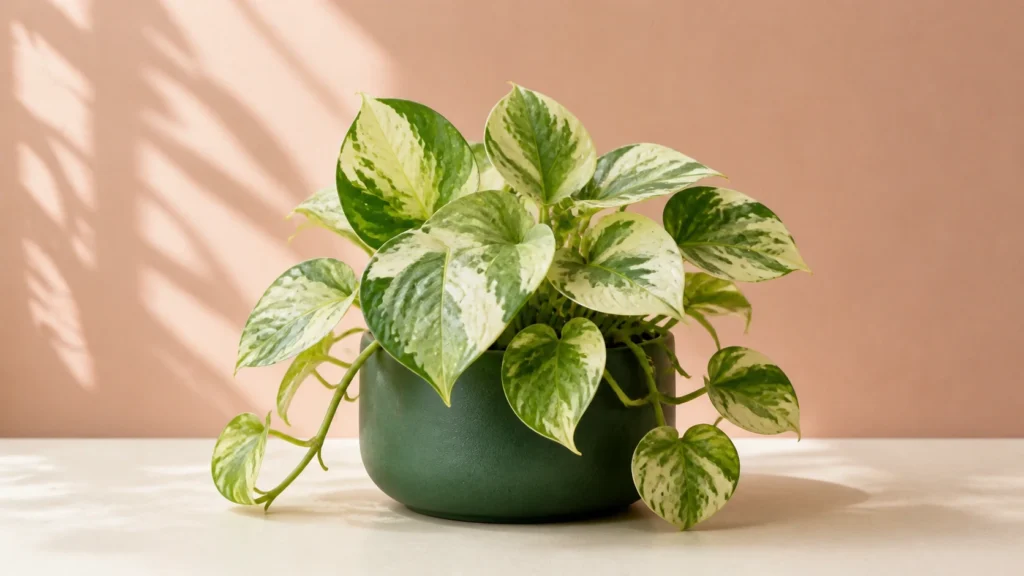
Manjula Pothos
Epipremnum aureum 'Manjula'
A patented Epipremnum aureum cultivar with broad, wavy leaves marbled in cream, white, silver, and green, slower-growing than Golden Pothos and more demanding about light.
Watering frequency
Every 7-14 days
Ideal temperature
65-85°F / 18-29°C
Humidity
40-60%
Care difficulty
Easy
Air purifying
Yes
Growth rate
Slow
Plant size
2-6 ft / 0.6-1.8 m
Soil type
Well-draining potting mix with perlite
Fertilizer need
Monthly, spring-summer.
Care summary
- Light: Bright indirect light is essential to keep the white and cream variegation.
- Water: Let the top 1-2 inches dry, then water thoroughly and drain.
- Soil: Use an airy, well-draining mix in a pot with drainage holes.
- Growth: Slower than Golden Pothos; prune to keep the plant full.
- Humidity: Average household humidity is usually sufficient.
- Safety: Keep away from pets and children who may chew the leaves.
Common problems
- White areas turning brown: Usually sunburn from harsh light on pale leaf tissue.
- Leaves reverting to solid green: Light too dim; move the plant to a brighter spot gradually.
- Slow growth: Normal for this cultivar, especially in lower light.
- Yellow leaves: Often overwatering or poor drainage.
- Brown, crispy leaf edges: Check watering consistency, dry air, and fertilizer buildup.
- Mealybugs or scale: Inspect leaf joints, stems, and new growth.
Plant care guide
About Manjula Pothos
Manjula Pothos (Epipremnum aureum 'Manjula') is a patented cultivar of the same species as Golden Pothos, whose accepted botanical record is maintained by Kew Plants of the World Online. Where the standard Golden Pothos shows yellow-gold flecks on green, Manjula's leaves are larger, noticeably wavy along the edges, and marbled in broad patches of cream, white, silver-green, and deep green that blend into one another like watercolor.
It is a patented selection, released under the breeder denomination HANSOTI14 and sold under the trade name Manjula. Because the cultivar is protected by a US plant patent, it usually appears in licensed nurseries rather than as unlabeled cuttings in general retail. The protection does not stop a home gardener from rooting a cutting for personal use.
The cultivar is also sold as Happy Leaf Pothos in some markets. Whatever the label, the care principles follow the species: bright indirect light, watering after the upper mix begins to dry, and propagation from node-bearing stem cuttings. Manjula simply requires more light than the all-green form because so much of each leaf is pale tissue with no chlorophyll.
Why You'll Like It
Manjula's main appeal is visual. Every leaf shows a different arrangement of cream, white, silver, and green, so the plant looks almost painted rather than striped. The broad, ruffled leaf shape is unusual among pothos cultivars, which usually keep narrower or flatter blades.
It also grows more compactly than Golden Pothos. The spaces between leaves, or internodes, are typically tighter, which gives the plant a fuller, denser silhouette on a shelf or desk. That makes it a good choice when you want the pothos look without a long, fast-running vine.
The trade-off is pace. Because large sections of each leaf contain no chlorophyll, Manjula photosynthesizes less efficiently than a solid-green pothos and grows slowly, especially in the dimmer months. It is not a difficult plant, but it rewards patience and a consistently bright position.
What Kind of Plant Is It?
Manjula Pothos is a climbing and trailing aroid vine, exactly like its parent species. Each section of stem carries a node where a leaf and aerial root can emerge, which is what makes pothos propagation so simple. NC State Extension's Epipremnum aureum profile describes the species' brown aerial roots, juvenile container foliage, and the much larger mature leaves produced when the plant climbs in warm, high-light conditions.
What distinguishes Manjula is human selection for appearance:
- Broad, wavy leaves: The leaf blade is wider and more heart-shaped than Golden Pothos, with a ruffled, undulating margin.
- Watercolor variegation: Cream, white, silver, and green patches blend into one another rather than forming sharp color blocks, and no two leaves look exactly alike.
- Tight internodes: The shorter distances between leaves produce a denser, more compact vine than Golden Pothos.
- Chlorophyll-poor tissue: The pale sections photosynthesize little, which slows growth and raises the plant's light requirement compared with greener cultivars.
- Patented status: The cultivar is protected by a US plant patent, which affects commercial propagation but not home use.
History of Manjula Pothos
Manjula's history is well documented because the cultivar is protected by a US plant patent, and the patent record for 'HANSOTI14' describes where it came from.
According to that record, Ashish Arvind Hansoti, an independent breeder working near Mumbai, India, discovered the plant in 2010 as a naturally occurring branch mutation within a group of more than 1,000 clones of a proprietary selection of Epipremnum pinnatum 'Compacta'. He selected the branch for two traits: unusually short internodes, which produce the plant's dense, mounding habit, and the brightest marbled variegation. The selection was reproduced by vegetative cuttings through about 25 generations before Hansoti filed the US plant patent application in March 2014; the patent was granted in August 2016.
One detail in that record matters for buyers. The patent lists the parent as Epipremnum pinnatum 'Compacta', while most retail labels, including the Costa Farms product description, identify the plant as Epipremnum aureum. The pothos trade is not consistent about this naming, so treat the label as a retail convenience rather than a settled classification. What is consistent is that the plant entered the market under the trade name Manjula, and the patent protection means licensed growers are expected to produce it through tissue culture, which is why unlabeled Manjula cuttings are relatively uncommon in general retail.
Related Pothos Varieties
Manjula is one of several white-variegated pothos cultivars, and retail identification is genuinely messy. Unlabeled cuttings can be hard to pin down, so preserve a reliable label when you can. The comparisons matter because leaf shape and variegation tell you how much light the plant will need.
- Marble Queen Pothos: The older, familiar marbled pothos with cream and white marbling across a more elongated heart-shaped leaf. It grows slowly too, but its leaf edges are generally flat rather than wavy.
- Pothos 'N'Joy': A compact selection with cleaner, more sharply defined green and white patches. The white usually forms distinct sections rather than the blended watercolor effect of Manjula.
- Pothos 'Glacier': A small-leaved, compact pothos with silvery-white variegation, often confused with N'Joy in retail.
- Pothos 'Pearls and Jade': A University of Florida release with smaller leaves speckled in white, gray, and green. It shares Manjula's pale palette but lacks the broad, wavy blade and the swirled, feathered pattern.
- Satin Pothos: Not a true pothos at all, but a Scindapsus pictus with matte green leaves splashed in silver, frequently shelved with the pothos cultivars because the care is so similar.
All of these cultivars share the same species-level care and the same pet-toxicity warning. The practical rule for a high-white plant like Manjula is simple: the more white a leaf carries, the more light it needs to stay healthy and keep its pattern.
Where It Works Best
Give Manjula Pothos a bright position without harsh direct sun. A spot within a few feet of an unobstructed east- or west-facing window is a practical target, as is a bright room with the plant set back from the glass. Direct sun through a bare south-facing window can scorch the palest leaf tissue.
In medium light the plant usually survives, but it tends to grow more slowly, stretch between leaves, and produce greener growth. In low light the white sections shrink and new leaves come in increasingly green. A grow light is a more dependable solution than repeatedly moving the plant between rooms.
Living rooms and home offices suit its compact, full shape. A bright bathroom provides humidity, but moisture cannot replace light. In bedrooms, keep the plant and its vines beyond the reach of pets, since this is not a pet-safe plant.
How to Care for Manjula Pothos
Light: Bright indirect light is the single most important requirement. It keeps the white and cream variegation vivid and supports steady growth. The Royal Horticultural Society's Epipremnum growing guide recommends bright light without direct sun, and warns against deep shade. If the plant is currently in a dim spot, move it brighter gradually to avoid shocking the foliage.
Watering: When the top 1–2 inches (2–5 cm) of mix feel dry, water thoroughly until it runs through the drainage holes, then empty the saucer. Every 7–14 days is only a starting range. Because Manjula grows slowly and holds a lot of pale, low-transpiring leaf tissue, it often dries more slowly than Golden Pothos, so check the soil rather than watering on a schedule.
Soil and container: Use an airy mix that drains well. Adding perlite or fine orchid bark opens up a dense mix and protects the roots. Always use a pot with drainage holes; if a decorative pot has none, keep a removable nursery pot inside and discard collected water.
Humidity: Average household humidity around 40–60% is usually sufficient. In very dry rooms, brown leaf edges can develop; a humidifier or grouped plants help more than occasional misting. Humidity cannot compensate for poor light or waterlogged roots.
Temperature: Manjula prefers warm, stable indoor conditions, roughly 65–85°F (18–29°C). Keep it away from cold windows, exterior-door drafts, and abrupt temperature changes. Growth slows naturally when light and temperature fall.
Fertilizer: During active spring and summer growth, apply balanced liquid fertilizer at about half strength monthly. Pause when growth stops or the plant is stressed. Because this cultivar grows slowly, it needs less feeding than a fast vine; excess fertilizer can leave salts that damage roots or leaf tips.
Pruning and training: Cut long or bare vines just above a node with clean scissors. For a fuller pot, root several cuttings and return them to the container. Manjula can trail from a shelf or climb a small trellis or moss pole; tie vines loosely without crushing the stems.
Seasonal adjustment: In darker winter conditions the mix dries more slowly, so check before watering and feed only during active growth. Spring and early summer are the best times for pruning, propagation, and repotting.
How to Propagate Manjula Pothos
Propagation works the same way as for other pothos. Every cutting needs at least one healthy node; a leaf and petiole alone cannot form a new vine. A cutting with two or three leaves is usually easy for beginners to handle.
For water propagation:
- Choose a healthy vine and make a clean cut just below a node.
- Remove the lowest leaf if necessary so at least one node sits below the water while the remaining leaves stay dry.
- Place the cutting in clean water in bright indirect light.
- Refresh the water when it becomes cloudy or noticeably low.
- Move the cutting into a small pot of moist, well-draining mix after it has developed several healthy roots, rather than waiting for an exact number of days.
- Keep the mix lightly and evenly moist during the first stage of adjustment, then transition to the normal partial-drying routine.
Cuttings also root directly in potting mix. Bury a node, keep the medium lightly moist, and provide warmth plus indirect light. One practical note: because Manjula grows slowly, cuttings can take longer to establish than Golden Pothos, and a cutting with a strong green section usually roots more readily than one that is almost entirely white.
When to Repot
Repot based on roots and potting mix, not simply because a year passed. Signs include densely circling roots, rapid drying after thorough watering, roots emerging from the drainage holes, or compacted mix that absorbs unevenly. Slow growth alone can also reflect low light, cold, or pests, so check conditions before repotting a plant that is merely not growing quickly.
Choose a container only 1–2 inches (2–5 cm) wider and include drainage holes. Inspect the roots, remove only dead or rotten material, and set the root ball at the same depth in fresh mix. Water and drain. See the houseplant repotting guide for full steps.
Toxicity and Pet Safety
Manjula Pothos is not pet-safe. Like all Epipremnum aureum cultivars, it contains insoluble calcium oxalate crystals. The ASPCA Animal Poison Control listing for Devil's Ivy applies to the species and identifies oral irritation or swelling, drooling, vomiting, and difficulty swallowing among the clinical signs in pets. Breathing or swallowing difficulty requires urgent professional attention.
If a pet chews the plant, remove access and contact a veterinarian or animal poison-control service promptly for case-specific guidance. Do not rely on an unverified home remedy or wait for symptoms to become severe. A high shelf is only safe while trailing vines remain out of reach; ceiling hooks, enclosed plant cabinets, or genuinely pet-safe alternatives such as Spider Plant may be more dependable for persistent chewers.
The sap can also irritate sensitive human skin and the mouth. Wear gloves if the sap bothers you, wash your hands after pruning, and keep cuttings away from children.
Common Problems and Practical Fixes
- White areas turning brown: Pale leaf tissue scorches easily in harsh sun. Move the plant out of direct light and remove badly burned leaves.
- Leaves reverting to green: New growth turns greener when light is insufficient. Move the plant gradually toward brighter indirect light; existing leaves will not regain their pattern, but future leaves may.
- Slow growth: Expected for this cultivar, especially in low light. If the plant is also stretching between leaves, improve the light before assuming a health problem.
- Yellow leaves: Often overwatering or poor drainage. Let the mix dry appropriately and inspect the roots if symptoms continue. The yellow leaves guide explains how to compare watering, light, nutrition, and aging patterns.
- Brown, crispy leaf edges: Review watering consistency, dry drafts, and fertilizer buildup. Flush the mix occasionally if salts collect, and avoid feeding an already stressed plant.
- Root rot: Dark, mushy roots and persistently wet or sour-smelling mix indicate a serious drainage problem. Remove damaged roots, use a clean pot with fresh airy mix, and correct the watering routine. If most roots are lost, take healthy node cuttings as a backup. See the root rot guide for a more detailed recovery process.
- Mealybugs or scale: Inspect leaf joints, stems, and new growth, isolate the plant, and identify the pest before choosing treatment. Recheck weekly because a single cleaning may not remove every life stage.
Frequently Asked Questions
How is Manjula different from Marble Queen? Both are white-variegated Epipremnum aureum cultivars, but Manjula has broader, wavier leaves with a swirled, watercolor pattern, while Marble Queen shows cream and white marbling on a more elongated leaf. Manjula also tends to be more compact because of its shorter internodes.
Why is my Manjula turning green? Insufficient light is the most common cause. The plant produces less white tissue when it cannot photosynthesize efficiently. Move it gradually to brighter indirect light and judge the result by new leaves rather than existing ones.
Is Manjula Pothos rare or expensive? Because it is patented and licensed, Manjula is usually sold as a named plant rather than as unlabeled cuttings, and it can carry a higher price than common Golden Pothos. Availability varies by market; a labeled plant from a licensed grower is the reliable way to confirm you have the actual cultivar.
Is Manjula the same as Satin Pothos? No. Satin Pothos is usually Scindapsus pictus, a different genus with velvety, silver-spotted leaves. Manjula is Epipremnum aureum with smooth, wavy leaves in cream, white, and green. They share similar care but are botanically distinct.
Final Thought
Manjula Pothos earns its place in a collection through looks, not speed. Its broad, ruffled, watercolor leaves make it one of the most distinctive pothos cultivars, and its compact habit suits shelves and desks where a Golden Pothos would quickly take over.
The two habits that matter most: give it bright indirect light so the white stays white, and water according to the soil rather than the calendar. With those fundamentals in place, Manjula is a calm, patient plant that changes slowly and looks deliberate doing it.