
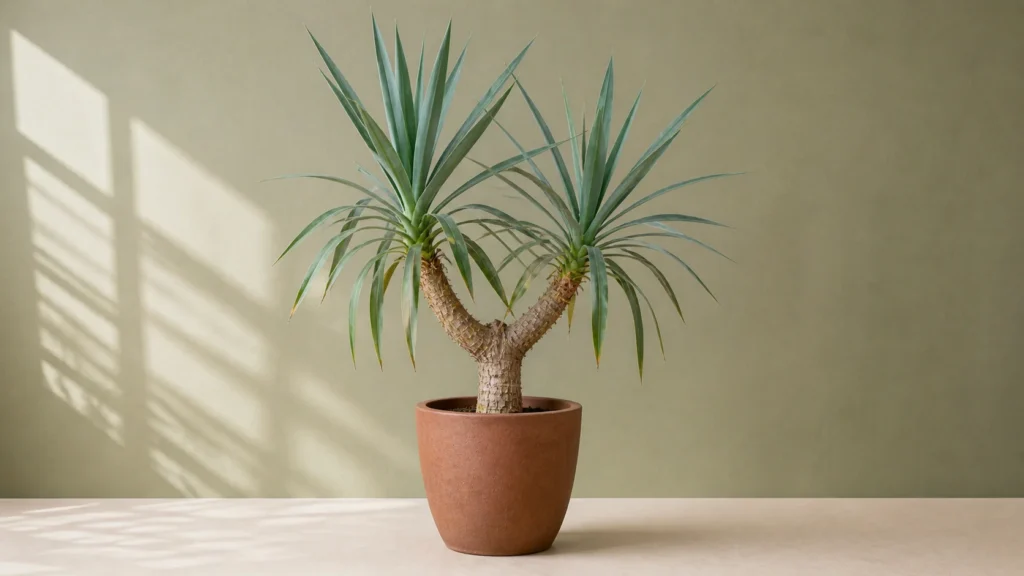
Spineless Yucca
Yucca gigantea
The ultimate low-maintenance statement plant — a bold, sculptural tree that forgives missed waterings and thrives on bright light and neglect.
Watering frequency
Every 2-4 weeks
Ideal temperature
60-85°F / 16-29°C
Humidity
30-50%
Care difficulty
Easy
Air purifying
No/Not Known
Growth rate
Slow
Plant size
4-8 ft / 1.2-2.4 m
Soil type
Gritty, fast-draining cactus or succulent mix
Fertilizer need
Twice while growing.
Care summary
- Light: Full sun or the brightest spot you have.
- Water: Let the soil dry completely between waterings.
- Soil: Gritty, fast-draining cactus or succulent mix.
- Temperature: Warm rooms; protect from cold drafts.
- Maintenance: Dust the leaves and prune spent leaves.
- Safety: Toxic to pets — saponins cause vomiting.
Common problems
- Yellowing lower leaves: natural aging or overwatering.
- Soft, brown trunk: root rot from standing water.
- Pale, stretched growth: not enough light.
- Brown leaf tips: inconsistent watering or salt buildup.
- Mealybugs: white cottony clusters on leaves and stems.
Plant care guide
About Spineless Yucca
The Yucca (Yucca gigantea) — also sold as the spineless yucca, soft-tip yucca, or giant yucca — is a slow-growing, tree-forming succulent from Central America and southern Mexico. Despite the desert-plant reputation, it is a member of the asparagus family (Asparagaceae), and it's one of the few houseplants that genuinely looks like a small tree: a thick, woody trunk topped with a fountain of long, leathery, sword-shaped leaves in pale green to blue-green. The NC State Extension notes that it was formerly known as Yucca elephantipes, a name that referenced the trunk's resemblance to an elephant's foot.
Unlike many of its relatives in the Yucca genus, this species is spineless — its leaves end in soft tips rather than sharp spines — which is exactly why it became a popular indoor plant. It doesn't spear you when you brush past it, it doesn't need pruning, and it survives conditions that would kill most houseplants within a month. In its native habitat it grows 15-30 feet tall; indoors, in a pot, it stays a manageable 4-8 feet for years.
Its rise as a houseplant tracks the wider fashion for "statement plants" — big, sculptural, architectural greenery that fills a corner the way furniture does. The yucca does this better than almost anything else in its price range, because it asks for almost nothing in return. It is the plant you buy when you want the look of a large indoor tree without the commitment of a ficus.
Why You'll Like It
The yucca is the closest thing houseplants offer to "set and forget." It needs watering every two to four weeks — less in winter — and it thrives on the bright, dry conditions that make other plants sulk. Miss a watering and it won't notice. Leave it for a month and it will still be standing, slightly leaner, completely unbothered.
It also looks genuinely expensive. The architectural silhouette — a clean trunk rising to a crown of arching sword-leaves — reads as intentional design in any room. It suits minimalist, mid-century, and Scandinavian interiors especially well, and it works as a floor plant, a corner anchor, or a patio piece in warm months.
Finally, it is honest about its needs. There is no mystery to a yucca: bright light, dry soil, neglect. If you can provide a sunny window or a bright room, you can keep this plant for decades. It is the rare large plant that a beginner can own without anxiety — which is why it remains a staple of offices, lobbies, and first apartments everywhere.
What Kind of Plant Is It?
Three traits define how a yucca behaves.
- It is a drought-adapted succulent tree. Its trunk and thick leaves store water, which is why it survives long dry spells. Overwatering is the only reliable way to kill it — a yucca's roots rot quickly in soil that stays wet, while dry soil is what it evolved for.
- It grows from the top, not the base. New leaves emerge from the crown, and the trunk lengthens slowly as old lower leaves yellow, dry, and fall away, leaving the bare woody stem. That natural "leaf-shedding" is normal and desirable — it's how the tree forms its trunk. The yellow leaves guide helps you tell natural aging from a real problem.
- It is built for light. Full sun is the native condition, and NC State recommends full sun for the healthiest growth. In dim rooms the yucca survives — sometimes for years — but growth stretches, the leaves pale, and the plant loses its dense, upright character.
Where It Works Best
Give the yucca the brightest spot in the house. A south- or west-facing window with several hours of direct sun is ideal; a bright room without direct sun works too, though growth slows. The plant tolerates a wide range of light but genuinely prefers the brightest corner you own — NC State's description of full-sun culture reflects its tropical-forest-edge origin, where it grows in open, sun-drenched sites.
Temperature is forgiving: 60-85°F (16-29°C) suits it, and it handles warm rooms comfortably. What it cannot tolerate is cold and sudden swings — NC State warns to bring it indoors when temperatures drop below 50°F, and to keep it away from cold drafts and abrupt temperature changes. In winter, keep it away from icy windows and outside doors.
Humidity is a non-issue; the yucca is adapted to dry air and normal household humidity is perfect. It is one of the few houseplants where a dry, warm room is exactly right — the humidity guide has little to offer this plant, which is itself useful information.
Place it as a floor plant in a living room corner, beside an entryway, or in a home office where its vertical structure balances a low sofa or desk. A pot with a heavy base prevents tipping as the trunk grows.
How to Care for Yucca
Watering: The single rule: let the soil dry out completely between waterings, then water thoroughly and let the excess drain. In a bright, warm room that means every 2-4 weeks in spring and summer, and less often — sometimes monthly — in winter. The watering guide explains why "less is more" for drought-adapted plants; with a yucca, when in doubt, wait. Soggy soil is the number one killer.
Light: Bright light, ideally full sun for several hours a day. The more light it gets, the denser and more upright the crown stays. In medium light the plant survives but stretches and pales; in low light it becomes weak and floppy. If your yucca starts leaning or the leaves lose their blue-green tone, it needs a brighter window. The light guide helps you pick the right spot.
Soil: Use a gritty, fast-draining cactus or succulent mix. NC State suggests a houseplant recipe of one part potting mix to three parts perlite or sand for good drainage — the goal is a mix that dries quickly and never holds standing water around the roots.
Temperature: Warm-to-comfortable rooms of 60-85°F (16-29°C). Keep it away from cold drafts, exterior doors, and windows that get icy in winter. It tolerates heat well but has no cold tolerance — 50°F is the practical floor.
Humidity: None needed. Normal household air is ideal; the yucca is adapted to arid conditions and needs no misting, pebble trays, or humidifiers.
Fertilizer: Feed lightly — once or twice during the growing season with a balanced or succulent-formula fertilizer — and skip feeding in winter. This is a plant that needs very little food; overfeeding produces soft, floppy growth.
Maintenance: Dust the long leaves occasionally with a damp cloth — dust dims their blue-green sheen. Remove yellowed or spent lower leaves by pulling them gently or cutting them near the trunk; this is how the trunk keeps its clean, sculptural look.
How to Propagate
Propagation is easy, which is part of the plant's appeal. Three methods work:
- Stem cuttings: Cut a section of the trunk with several inches of stem, let the cut end dry and callus for a few days, then plant it upright in gritty succulent mix. It roots slowly but reliably.
- Cane sections: Cut the trunk into several shorter sections, lay or stand them in moist mix, and each section can sprout new growth from the top or sides.
- Suckers or offsets: Mature plants occasionally produce pups at the base; remove them with roots attached and pot them up separately.
All three methods work best in spring and early summer, when the plant is actively growing. NC State lists seed, stem cuttings, and suckers as the standard propagation strategies. Because each cutting carries the same trunk-and-crown structure, you can turn one tall plant into several smaller ones — a common trick when a yucca outgrows its corner.
When to Repot
Repot every two to three years in spring, or when roots push through the drainage holes and the trunk becomes top-heavy in its pot. Move up only one pot size — a deep, heavy pot with good drainage is more important than a large one, and too much soil holds water too long. Use fresh gritty cactus mix, and wear gloves: while the leaves of this species are soft-tipped, the leaf margins can still have small teeth. Water sparingly for the first week or two after repotting while the roots settle. The repotting guide covers the general technique.
Toxicity and Pet Safety
The yucca is not pet-safe. Both the ASPCA and NC State list Yucca as toxic to cats and dogs — the toxic principle is saponins, concentrated in the leaves and roots. The ASPCA lists vomiting as the primary clinical sign in dogs and cats. NC State's poison notes add that humans experience nausea, vomiting, diarrhea, headaches, and dizziness if the plant is ingested, and that the sap can cause minor skin rashes.
If you have pets, place the yucca where they can't reach the leaves or dig at the roots, and sweep up fallen leaves promptly. If a pet chews the plant, remove it from reach and contact your veterinarian. For pet-friendly alternatives with a similar bold, structural presence, the pet-safe plants guide highlights options like the Parlor Palm and the Spider Plant — both non-toxic and both far easier to place in a pet household.
Common Problems and Practical Fixes
- Yellowing lower leaves: Usually natural aging — old leaves yellow, dry, and drop as the trunk forms. If the yellowing is widespread and the trunk feels soft, that's overwatering and root rot; let the soil dry out completely and check drainage.
- Soft, brown trunk: Root rot from standing water. This is the yucca's only real disease. Unpot, cut away dark mushy roots, repot in fresh dry gritty mix, and water far less.
- Pale, stretched growth: Too little light. Move it to the brightest window; new growth will come in denser and better colored.
- Brown leaf tips: Inconsistent watering or salt buildup from tap water. Water more evenly and use filtered water if your tap is hard; the brown tips guide walks through the diagnosis.
- Mealybugs: White cottony clusters on leaves and stems — the classic yucca pest, common on stressed plants. Wipe with rubbing alcohol on a cotton swab and treat weekly with insecticidal soap; the pest guide covers the full routine.
- Leaning trunk: The plant is reaching for light. Rotate the pot, move it brighter, and if the trunk has become top-heavy, stake it while the roots re-anchor.
Frequently Asked Questions
How often should I water a yucca?
Every 2-4 weeks in spring and summer, less often in winter — always after the soil has dried completely. A yucca that's kept in a bright, warm room and watered on a "when in doubt, don't" schedule will outlive you. The most common yucca death is loving it to death with water.
Why are my yucca's lower leaves turning yellow?
Almost always normal aging. The plant sheds older leaves as the trunk grows — that bare trunk is the look you're paying for. If several leaves yellow at once or the trunk feels soft, check for overwatering instead.
Does a yucca need full sun?
It does best in full sun or the brightest spot you have. It tolerates bright indirect light and even medium light, but growth stretches and the crown thins in dim conditions. Sunlight is the single biggest lever on how good a yucca looks.
Can I cut my yucca back if it's too tall?
Yes — unlike most trees, a yucca handles it. Cut the trunk at the height you want, let the cut end callus, and new growth will eventually sprout from the top or sides of the remaining trunk. The cut section can be rooted as a cutting, so you rarely waste a single piece.
Is yucca toxic to pets?
Yes. The ASPCA lists Yucca as toxic to cats and dogs; the saponins in the leaves and roots cause vomiting. Keep it out of reach of pets and sweep up fallen leaves.
Why are the tips of my yucca's leaves turning brown?
Usually inconsistent watering or mineral buildup from tap water. Water on a steadier schedule, let the soil dry between waterings, and flush the pot occasionally with clean water.
Does yucca grow well in low light?
It survives but doesn't thrive: growth stretches, the leaves pale, and the plant loses its dense upright shape. If your room is genuinely dark, this is not the plant for it — a Cast Iron Plant or ZZ Plant tolerates low light far better.
Why is my yucca leaning?
It's reaching toward the light. Rotate the pot a quarter-turn every few weeks and move it closer to the window; if the trunk is heavy and the pot light, upgrade to a heavier pot or stake the trunk temporarily.
Final Thought
The yucca is the houseplant equivalent of a desert tree: patient, water-wise, and indifferent to your schedule. Give it the brightest window you have, water it rarely, and otherwise leave it alone — that is the entire care routine, and it works for decades. In a world of needy tropicals and dramatic divas, there's a quiet pleasure in a plant that asks for nothing but light and makes a corner look intentional. If you want the look of a large indoor tree without the anxiety, the yucca is hard to beat.