
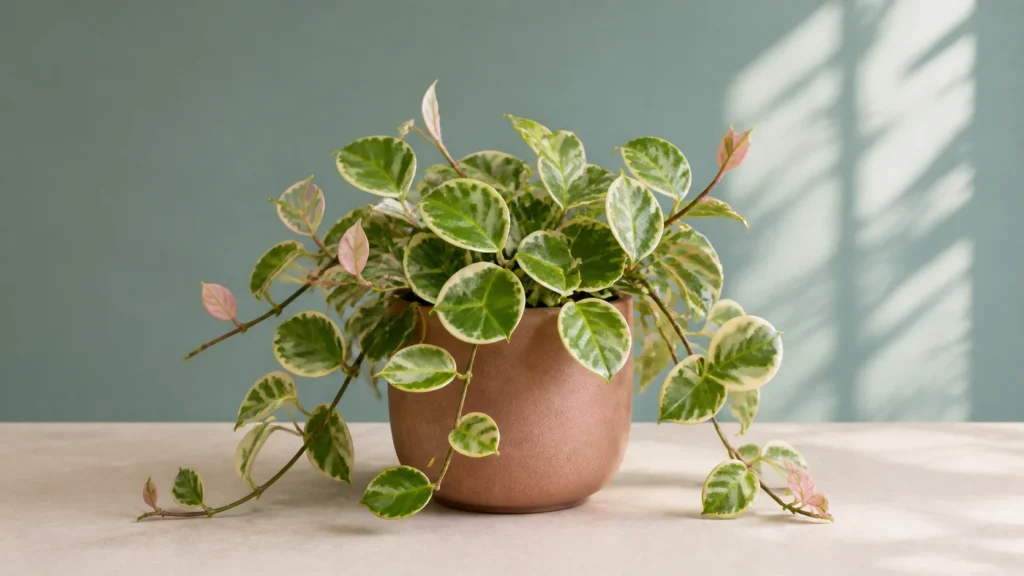
Hoya Krimson Queen
Hoya carnosa 'Krimson Queen'
A variegated Hoya carnosa cultivar with green leaves edged in cream and pink — a pet-safe trailing vine that rewards bright light with clusters of fragrant star-shaped flowers.
Watering frequency
Every 10-14 days
Ideal temperature
60-80°F / 16-27°C
Humidity
40-60%
Care difficulty
Easy
Air purifying
No/Not Known
Growth rate
Slow
Plant size
2-4 ft trailing / 0.6-1.2 m
Soil type
Light, well-draining mix with orchid bark
Fertilizer need
Every 4-6 weeks while growing.
Care summary
- Light: Bright indirect light for growth, flowers, and strong variegation.
- Water: Let the soil dry out fully between waterings; less in winter.
- Soil: Use a loose, well-draining mix with orchid bark or perlite.
- Bloom: Never cut the flower spur — it reblooms from the same spot.
- Humidity: Average household air is fine; a bright bathroom helps blooms.
- Safety: Not listed as toxic for pets; still keep chewers in mind.
Common problems
- Yellow or soft leaves: Overwatering or soil that stays wet too long.
- Pink new growth fading to plain green: Light too dim for the variegation.
- No flowers: Usually insufficient light or the flower spur was removed.
- Flower buds dropping: Moving the plant while buds are forming.
- Wrinkled, soft leaves: Underwatering or roots damaged by excess moisture.
- Mealybugs or scale: Check leaf joints, stems, and behind new growth.
Plant care guide
About Hoya Krimson Queen
Hoya Krimson Queen (Hoya carnosa 'Krimson Queen') is a variegated cultivar of the wax plant, a climbing or trailing perennial native to eastern Asia and Australia. The species record is maintained by Kew Plants of the World Online, and the Missouri Botanical Garden describes the plant as a long-lived houseplant whose variegated forms have creamy white leaf margins, sometimes with a pink tinge.
The signature look of Krimson Queen: dark green leaf centers with cream-to-white edges, and new growth that flushes bright pink before the edges settle to cream. This pink-on-white-on-green layering is why the plant is so popular. It is also sold under the names 'Tricolor' and, loosely, 'Variegata' — the same or closely related margin-variegated selections circulate under all three labels.
Its basic care follows the species, so this guide focuses on the cultivar's identity, its color needs, and how to coax blooms, while the Hoya Carnosa record carries the full care, propagation, and repotting detail.
Why You'll Like It
Krimson Queen combines three things that rarely meet in one houseplant: it is genuinely pet-safe, it is an easy trailing vine, and it produces showy, fragrant flowers indoors. Very few plants check all three boxes.
The foliage alone justifies the plant — the cream-edged leaves with pink new growth look almost artificial, and the color holds year-round. Then, under the right conditions, it adds clusters of waxy, star-shaped flowers with a sweet, honey-like scent that often appears in the evening.
It is also a patient, forgiving plant. Hoyas prefer to be left alone: water when dry, do not repot often, do not move it during bud set. For someone who wants a low-maintenance vine that is safe around pets — unlike pothos or philodendron — Krimson Queen is one of the best choices in the houseplant world.
The bloom is worth the wait, and it has a rhythm worth knowing. Mature hoyas flower mainly in the warmer months, often in waves — a cluster opens, fades after a week or two, and the same spur can produce another round later in the season. The flowers are small, waxy five-pointed stars with a raised crown in the center, and they produce noticeable nectar that drips if the plant is watered heavily during bloom. The scent is most pronounced in the evening, which is when the plant's natural pollinators are active. Some growers find the fragrance pleasantly sweet; a few find it strong, so if you are sensitive to scent, it is worth knowing the aroma arrives before the plant is placed in a bedroom.
What Kind of Plant Is It?
Krimson Queen is a trailing and twining vine with semi-succulent leaves that store water, which is why it tolerates dry soil between waterings. It is an epiphyte in nature, growing on trees with roots that prefer air and quick drainage — that is why the soil mix matters more than the watering schedule.
Three traits define how it behaves:
- The leaves are variegated, so light matters. The cream margins have less chlorophyll than the green centers. Bright indirect light keeps the pink new growth vivid and the cream edges crisp; dim rooms push the plant toward greener, less colorful leaves.
- Flowers come from spurs, not new growth. The flower stalk (peduncle, or spur) forms in a leaf axil and reblooms from the same spot for years. The Missouri Botanical Garden profile is explicit: do not remove the flowering stalk after bloom, because new flowers form on the old spur. Cutting it off sets flowering back by a year or more.
- It has a reassuring species-level safety reference. ASPCA lists Hoya carnosa under the common name Honey Plant as non-toxic to cats and dogs. Because Krimson Queen is a cultivar of that species, this is more useful than inferring safety from an absent database entry. Large amounts of leaf material can still cause stomach upset, and the plant label should be checked before relying on the identification.
Krimson Queen vs. Other Hoyas
Hoya cultivars are easy to confuse because many share the "wax plant" label:
- Hoya Carnosa — the species: solid green waxy leaves, the parent of most cultivars, and the reference record for care.
- Krimson Queen — green centers, cream margins, pink new growth. The margin-variegated form.
- Krimson Princess — the inverse pattern: green edges with cream-pink centers. Often mislabeled as Krimson Queen, so check which part of the leaf is variegated.
- Hindu Rope (Compacta) — tightly curled, rope-like leaves on the same species; a striking slow-growing sport.
- Hoya kerrii — the "sweetheart" hoya with heart-shaped leaves, often sold as a single leaf in a pot.
All share the same basic care: bright indirect light, dry soil between waterings, and patience. If you want the classic wax-plant flowers and the strongest variegation, Krimson Queen is the most widely available choice.
Where It Works Best
Bright indirect light is the single most important placement rule. A south- or west-facing window with a sheer curtain, or a bright east window, gives the plant the light it needs to grow, bloom, and hold its pink-and-cream coloring. The houseplant light guide explains how to judge light levels before choosing a spot.
A bright bathroom is an excellent home — the humidity helps flower buds set, and the variegation appreciates the steady light. Living rooms and home offices work well on shelves or in hanging planters, letting the vines trail. In a dim corner the plant will survive but stop blooming, lose its pink flush, and grow slowly and sparsely.
Like all hoyas, Krimson Queen prefers stability. Once flower buds appear, do not move the pot or even rotate it much — bud drop is the classic response to relocation.
How to Care for Hoya Krimson Queen
The full routine is covered in the Hoya Carnosa care guide linked above. The cultivar-specific notes are these:
Light: Bright indirect light drives everything — growth, flowering, and variegation. If the pink new growth fades to plain cream and green, the plant is telling you the light is too weak.
Watering: Let the soil dry out fully between waterings, then water thoroughly and drain. Many homes land around every 10-14 days in the growing season and every 3-4 weeks in winter, but the soil and pot matter more than the calendar. The watering guide explains how to read soil moisture reliably. When in doubt, wait — hoyas tolerate drought far better than wet feet.
Soil: Use a loose, well-draining mix with orchid bark or perlite. The goal is air around the roots, not a dense moisture-retentive soil.
Humidity and temperature: Average household conditions suit it. A bright bathroom or a humidifier nearby can encourage flowering, but humidity never substitutes for light. Keep it above about 55°F (13°C) and away from cold drafts.
Fertilizer: Feed with a diluted balanced fertilizer every 4-6 weeks during spring and summer, and skip winter feeding. The fertilizing guide covers when and how much to feed.
Pruning: Trim only dead or badly damaged growth. Never cut the flower spurs, and do not remove healthy vines to "tidy up" — hoyas grow from their tips and take time to replace what you remove.
How to Propagate
Krimson Queen roots easily from stem cuttings with at least one node — take a cutting with two or three leaves, remove the lowest leaf, and root it in water or moist mix in bright indirect light. Because it is a variegated cultivar, choose a cutting with strong cream margins and pink new growth for the best-looking new plant.
Propagation is reliable, but flowering is not immediate: a young cutting usually needs a couple of years of growth and good light before it produces its first spurs. That is normal, not a problem.
When to Repot
Hoyas bloom best when slightly root-bound, so repot rarely — only when roots escape the drainage holes, the soil dries out almost instantly, or the plant has been in the same mix for several years. Move up just 1-2 inches in pot size and use fresh well-draining mix. The houseplant repotting guide covers the process; the key difference for hoyas is to keep the new pot small and avoid disturbing the roots more than necessary.
Toxicity and Pet Safety
The evidence is more specific than a missing database entry: the ASPCA lists Hoya carnosa as non-toxic to dogs, cats, and horses. Krimson Queen is a cultivar of that species. Any plant material can still cause stomach upset when eaten in quantity, so discourage chewing and place it away from persistent plant-eaters.
The sap can be mildly irritating to sensitive human skin, so wash your hands after pruning.
Common Problems and Practical Fixes
- Yellow or soft leaves: Almost always overwatering or heavy soil. Let the mix dry fully, improve drainage, and reduce watering. If stems at the base feel mushy, check for root rot and repot in fresh dry mix.
- Pink new growth turning plain green: Light too dim. Move the plant to brighter indirect light; future new growth should regain the flush.
- No flowers: The usual causes are insufficient light, a plant still too young, or a flower spur that was cut off. Give it bright indirect light, do not move it during bud set, and never remove spurs.
- Flower buds dropping: Moving or rotating the pot while buds are forming is the classic trigger. Leave the plant in place once buds appear.
- Wrinkled, soft leaves: Could be underwatering, but also root damage from previous overwatering. Check the roots and the soil, then adjust.
- Mealybugs or scale: Hoyas are prone to both, hidden in leaf joints and behind new growth. Isolate the plant, wipe affected areas with rubbing alcohol, and recheck weekly.
Frequently Asked Questions
Why is my Hoya Krimson Queen not flowering?
Light is the most common missing ingredient — hoyas need bright indirect light for several hours a day to set buds. Age also matters; young plants may take a couple of years. And if the flower spur was ever cut off, flowering will wait until the plant grows a new one.
Should I cut off the brown flower spurs after blooming?
No. The spur reblooms from the same spot year after year, and each bloom cluster can get larger. Cut only the dried flowers, never the spur itself.
Is Hoya Krimson Queen safe for cats and dogs?
The ASPCA lists Hoya carnosa as non-toxic to dogs, cats, and horses, and Krimson Queen is a cultivar of that species. Large amounts of plant material can still cause stomach upset, so discourage chewing.
Why is my Hoya Krimson Queen growing so slowly?
Hoyas are naturally slow growers, and variegated forms are slower still. Slow growth is normal; what matters is that the plant keeps producing healthy new leaves. Improve light and avoid repotting too often, and let the plant be.
Why do the leaves have different shades of cream and green?
This is normal for a margin-variegated hoya and not a sign of trouble. Leaf color shifts with age, light, and the plant's energy balance. New leaves flush pink from anthocyanin pigments, then settle to cream edges as they mature; older leaves can show broader cream margins, while a leaf formed in dimmer conditions comes in greener. Sudden reversion to all-green growth on a whole stem is worth pruning back, but variation between individual leaves is the plant working as designed.
Final Thought
Krimson Queen is the plant for people who want a beautiful, fragrant, pet-safe vine without a demanding routine. Give it bright indirect light, water when the soil is dry, leave the flower spurs alone, and mostly just leave it alone. In return, it delivers year-round cream-edged foliage, pink new growth, and — when it is ready — clusters of star-shaped flowers that make the patience worth it.