
Plant Collection
Low Maintenance Houseplants
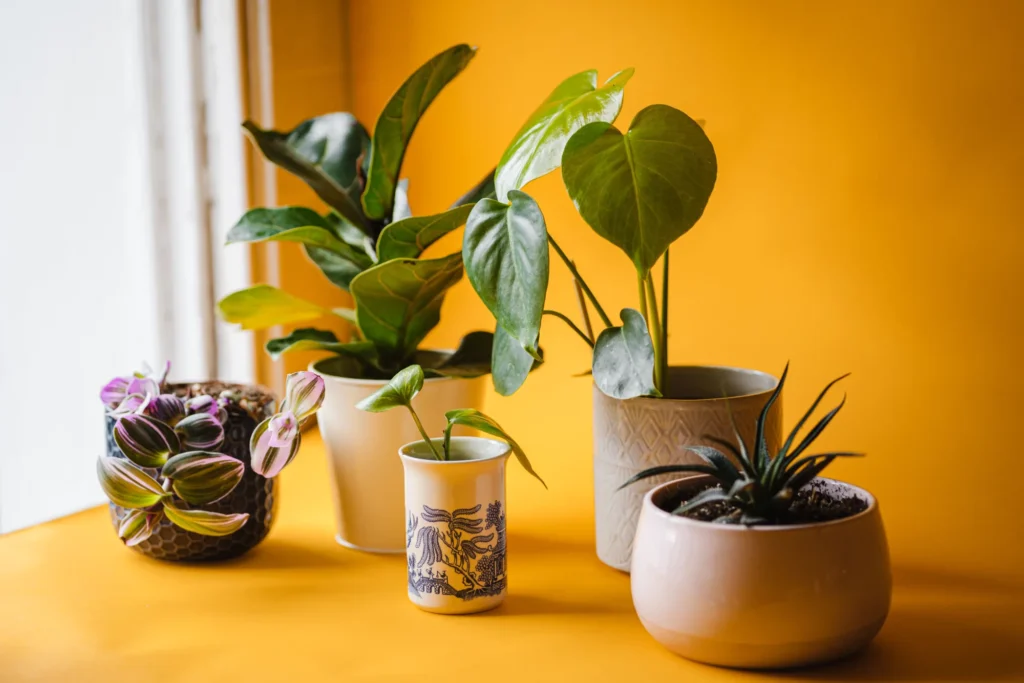
Low maintenance houseplants are for people who want indoor greenery without turning plant care into a second job. The best choices tolerate ordinary rooms, do not need constant pruning, and usually forgive an occasional missed watering. They are not no-maintenance plants. They still need usable light, drainage, seasonal observation, and a watering routine based on the soil instead of a fixed calendar.
This collection focuses on easy-care houseplants that reduce routine decisions. Some are drought-tolerant succulents. Some are slow-growing foliage plants. Some adapt well to normal household humidity. What they share is a practical care rhythm that works for busy homes, offices, apartments, and beginners who want fewer chances to overdo things.
What Low Maintenance Really Means
Low maintenance does not always mean “water less.” A low watering houseplant can fail in a dark corner if the pot stays wet for weeks. A bright-window succulent can be simple in the right light and frustrating in a dim room. A trailing vine may be forgiving, but it still needs pruning when it grows long.
Use low-maintenance houseplants as a starting category, then compare the plant’s actual needs. Light controls growth speed and water use. Pot size controls how long the soil stays wet. Pet safety controls where the plant can sit. Mature size controls whether the plant remains manageable after a year.
The safest approach is to choose a plant whose natural routine already matches your space. If you forget watering, choose plants that prefer a dry-down. If your room is dim, choose shade-tolerant foliage rather than a sun-loving succulent. If you have cats or dogs, check pet safety before putting any plant at floor level.
5 Low-Maintenance Houseplants for Simpler Routines
These five low-maintenance houseplants cover different looks: a snake plant group, glossy foliage, trailing growth, succulent structure, and sculptural dry-room form. Each one is forgiving in a different way, so match the reason for the recommendation to your room.
1. Snake Plant
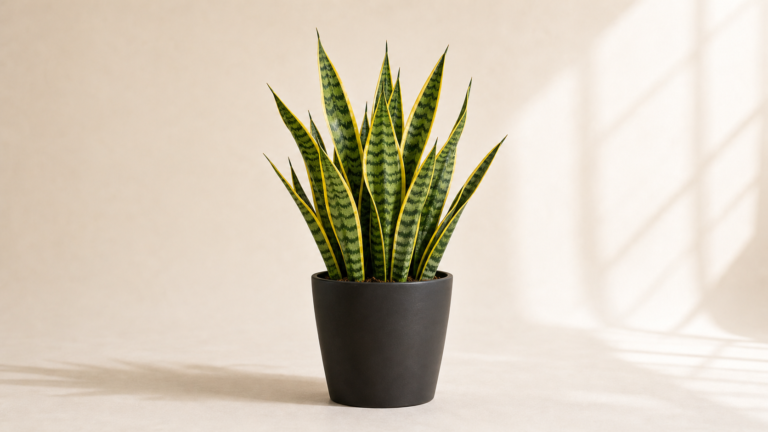
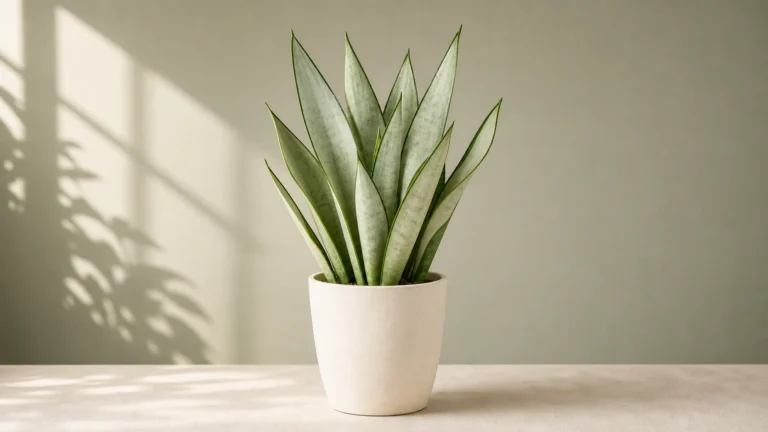
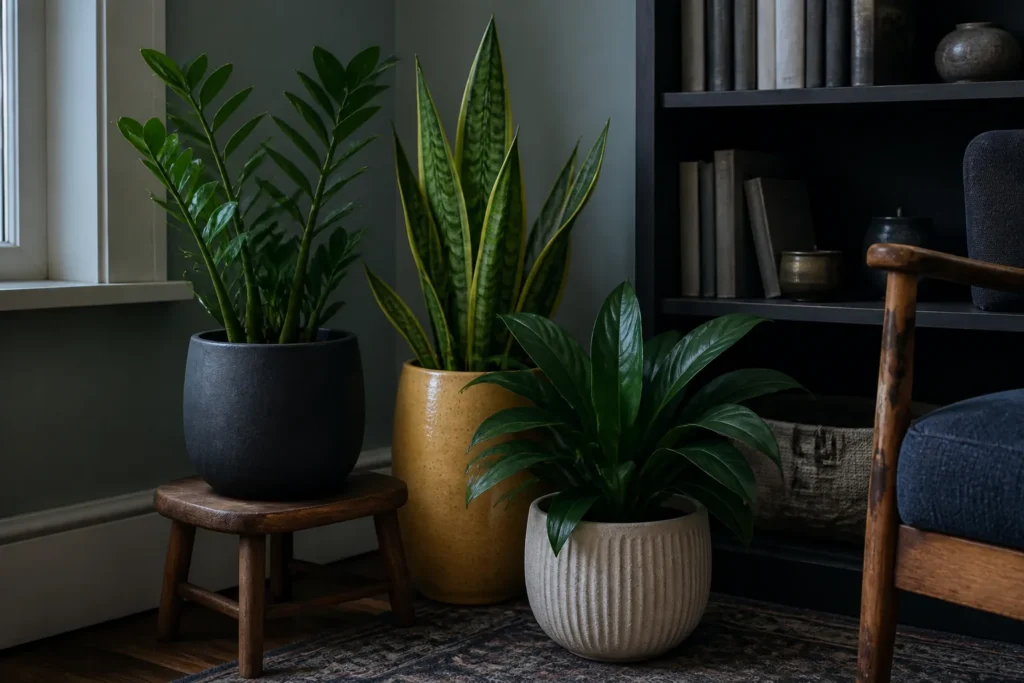
Snake Plant is one of the most familiar low-maintenance houseplant groups because it asks for patience more than constant attention. Snake Plant Laurentii gives the classic tall yellow-edged look, while Snake Plant Moonshine stays more compact and adds a pale silver-green color for desks, shelves, and smaller rooms.
Both choices work for bedrooms, entryways, living rooms, and offices with low to bright indirect light. Brighter indirect light keeps Laurentii’s yellow margins clearer and helps Moonshine hold its silver tone, while softer light slows growth and reduces water use. Let the soil dry thoroughly, then water deeply and drain the pot.
Snake Plant is low maintenance because it grows slowly, needs little pruning, and does not demand high humidity. Its main warning is pet safety: both Laurentii and Moonshine are not good choices for cats or dogs that chew leaves.
2. ZZ Plant
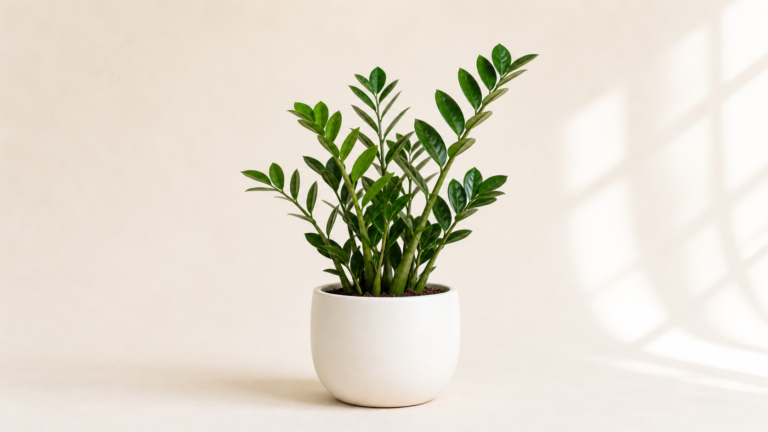
ZZ Plant is a low-maintenance indoor plant for people who want glossy foliage and a quiet routine. Its underground rhizomes store water, so the plant is built to handle longer gaps between watering sessions. The common mistake is watering too often because the leaves still look shiny.
Use ZZ Plant in low to bright indirect light. In lower light it grows slowly, but that slow pace is part of why it works in offices and corners with limited natural light. Give it a draining pot and let the mix dry substantially before watering again.
ZZ Plant is especially useful when you travel, forget weekly checks, or prefer a plant that does not change shape quickly. It is not pet-safe, so keep it away from animals that chew or dig.
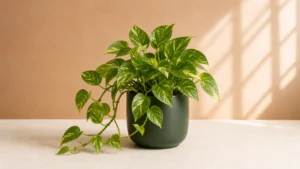
3. Golden Pothos
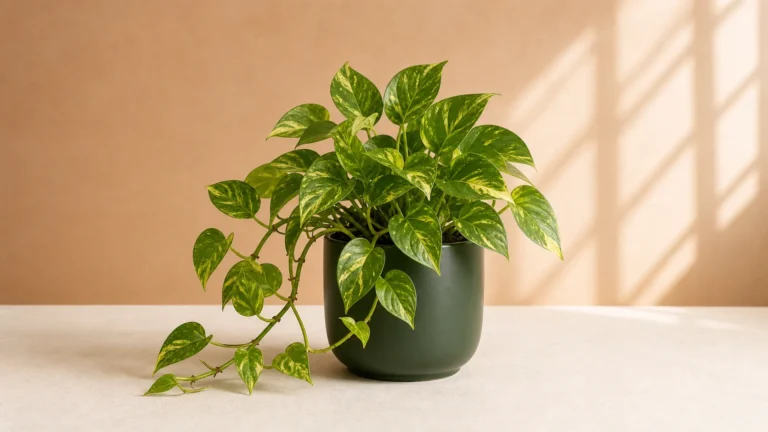
Golden Pothos is more active than Snake Plant or ZZ Plant, but it still belongs among low-maintenance houseplants because it adapts to many indoor rooms and recovers well from pruning. It gives visible feedback, which makes care easier to understand.
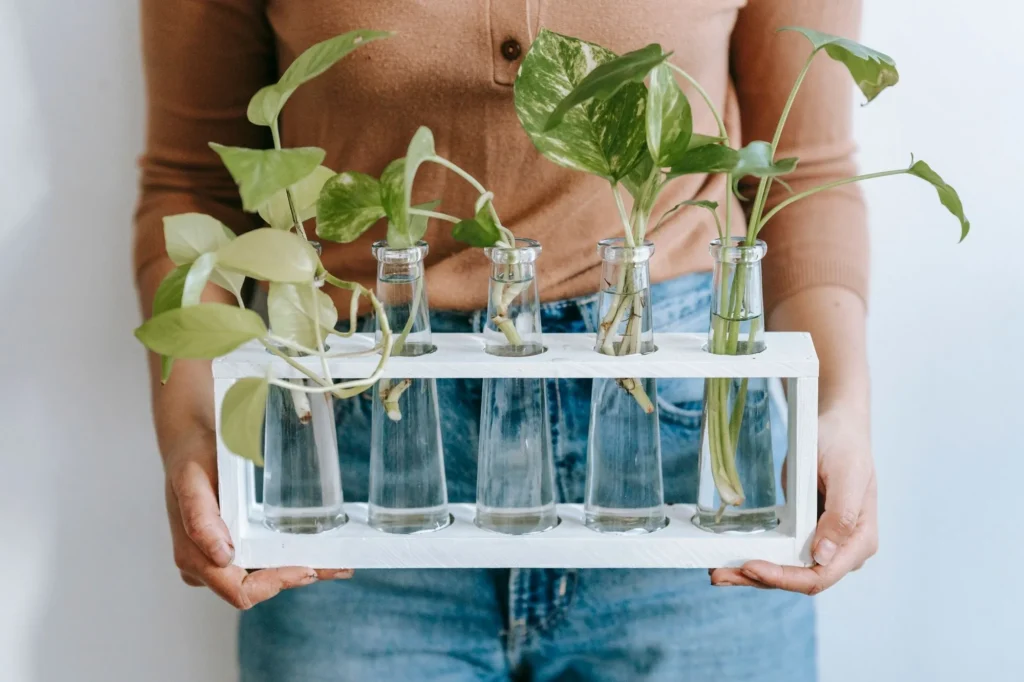
Place Golden Pothos in medium to bright indirect light for fuller vines and stronger gold variegation. It can tolerate lower light, but growth may become thinner and greener. Water when the upper mix has dried, then let excess drain. If vines become too long, cut them back and use healthy nodes for propagation.
Choose Golden Pothos if you want an easy trailing plant for a shelf, bookcase, or hanging pot. It is not pet-safe, and long vines can become reachable even when the pot starts high.
4. Jade Plant
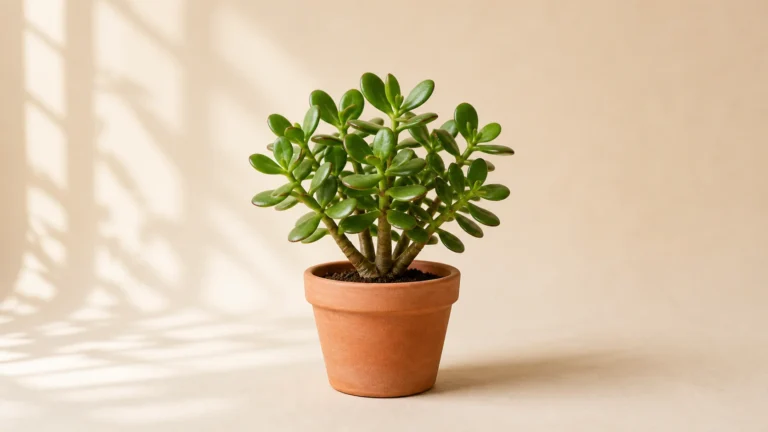
Jade Plant is low maintenance when it has the light it needs. Its thick leaves and stems store water, so it prefers a soak-and-dry rhythm rather than frequent small drinks. In a bright window, this routine is simple. In weak light, the same plant can stretch and stay wet too long.
Use Jade Plant on a sunny or very bright windowsill. Let the soil dry fully or almost fully before watering, and use a pot with drainage. Avoid oversized containers, which hold extra moisture around the roots.
Jade is a good easy-care houseplant for people who like slow growth and a compact tree-like shape. It is not pet-safe, so use careful placement in homes with animals.
5. Aloe Vera
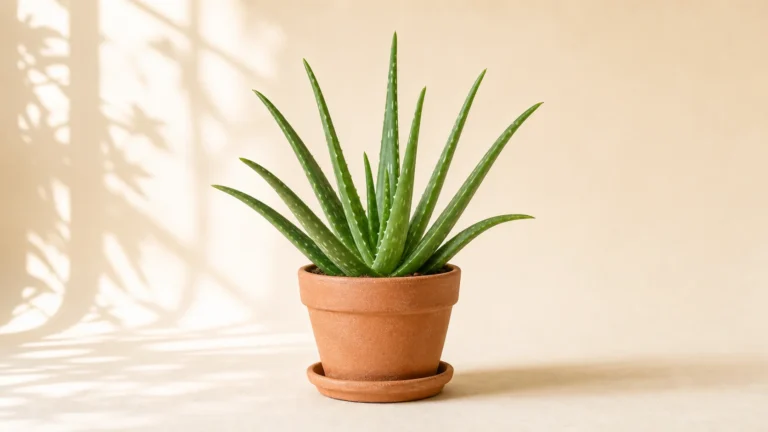
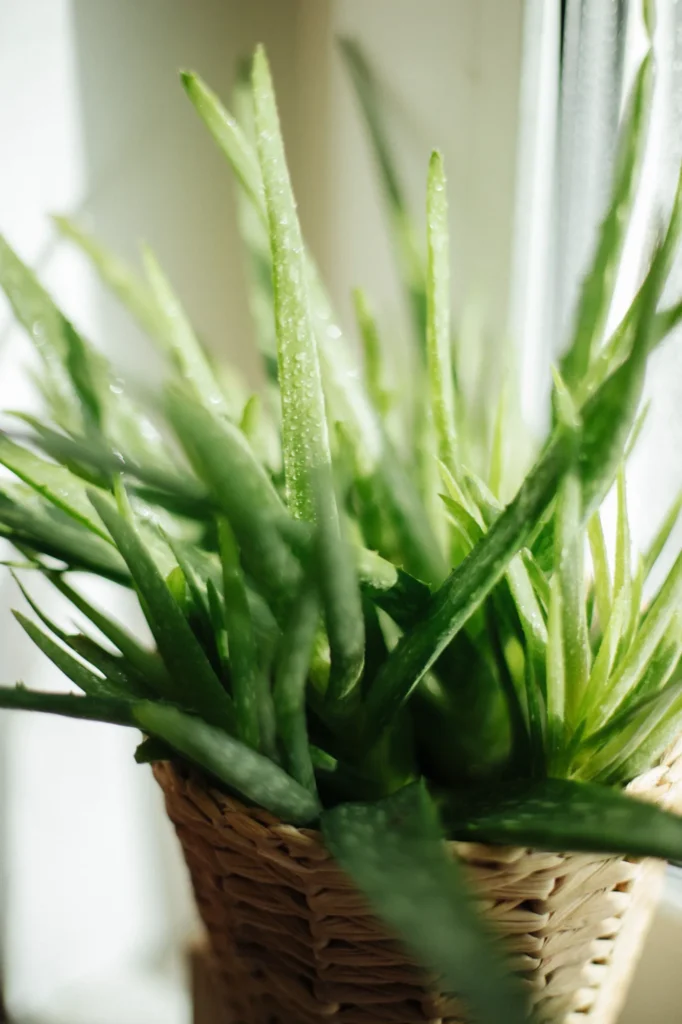
Aloe Vera is a forgiving houseplant for bright, dry spaces. It stores water in fleshy leaves and does not need misting, high humidity, or constant feeding. The plant becomes difficult only when it is kept too dark or watered before the soil has dried.
Give Aloe Vera strong light, ideally close to a bright window. Water thoroughly, drain completely, then wait. Slight leaf wrinkling can be a more useful signal than the calendar. Soft, translucent, or collapsing leaves often point to excess moisture.
Choose Aloe if you want a sculptural plant with a simple routine. Skip it for low-light rooms, pet-accessible shelves, or decorative pots without drainage.
Browse More Low-Maintenance Houseplants
The five Top Picks are starting points. Browse the full low-maintenance watering group below, then open each Plant guide to confirm light, pet safety, mature size, humidity, and watering details.
-

Agave isthmensis Agave isthmensis
Agave isthmensis
A tiny, crab-shell-like agave from southern Mexico with blue-green leaves and red-brown teeth, perfect for a bright windowsill.
-
Agave potatorum Agave potatorum
Agave potatorum
A compact, heavily spined agave with short broad leaves, popular in the succulent trade and known in China as the Leishen or thunder-god agave.
-
Aloe Vera Aloe Vera
Aloe vera
A sun-loving succulent with fleshy leaves that stores water and works well for bright windowsills and dry homes.
-
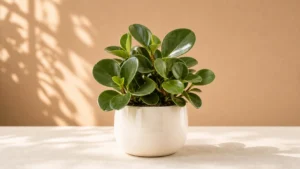
Baby Rubber Plant Baby Rubber Plant
Peperomia obtusifolia
A compact Baby Rubber Plant with thick glossy leaves, a forgiving growth habit, and verified non-toxic status for cats and dogs.
-
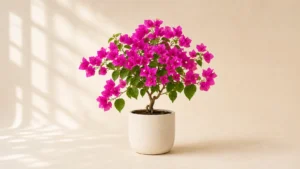
Bougainvillea Bougainvillea
Bougainvillea spp.
A sun-hungry woody vine with vivid papery bracts, best grown as a patio container plant that overwinters at the brightest window available.
-
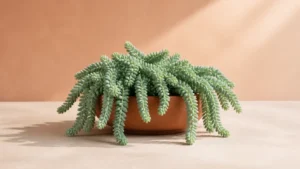
Burro’s Tail Burro’s Tail
Sedum morganianum
A cascading curtain of plump blue-green beads — the most dramatic trailing succulent, as long as you resist touching it.
-
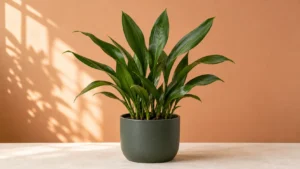
Cast Iron Plant Cast Iron Plant
Aspidistra elatior
A slow-growing, shade-tolerant plant with upright leathery leaves, valued for handling ordinary rooms without demanding constant attention.
-
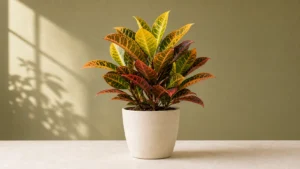
Croton Croton
Codiaeum variegatum
A colorful tropical shrub whose thick patterned leaves stay brightest with strong light, steady warmth, and consistent care.
-
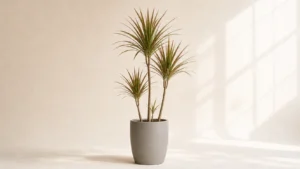
Dragon Tree Dragon Tree
Dracaena reflexa var. angustifolia
A sculptural, slow-growing indoor tree with narrow red-edged leaves that prefers bright filtered light and substantial dry-down.
-
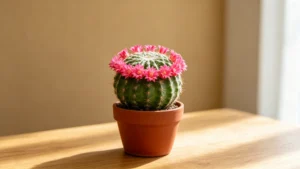
Dwarf Chin Cactus Dwarf Chin Cactus
Gymnocalycium baldianum
A compact Argentine cactus with curved spines and pink to crimson flowers, suited to bright filtered light, a gritty mix, and careful dry-down watering.
-
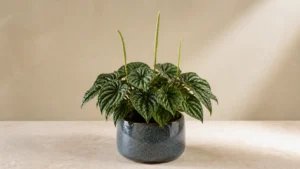
Emerald Ripple Peperomia Emerald Ripple Peperomia
Peperomia caperata
A compact, easy-care peperomia with deeply wrinkled, heart-shaped emerald-green leaves and slender flower spikes, tolerating medium light, average humidity, and infrequent watering.
-
Golden Pothos Golden Pothos
Epipremnum aureum
A fast-growing trailing vine with heart-shaped leaves and golden variegation that adapts well to indoor life and beginner care.
How to Choose Low-Maintenance Houseplants
Choose by Light First
Low-maintenance care only works when the light is compatible. Snake Plant and ZZ Plant tolerate softer light. Golden Pothos adapts but looks better with useful indirect light. Jade Plant and Aloe Vera need much brighter positions.
Avoid Overwatering
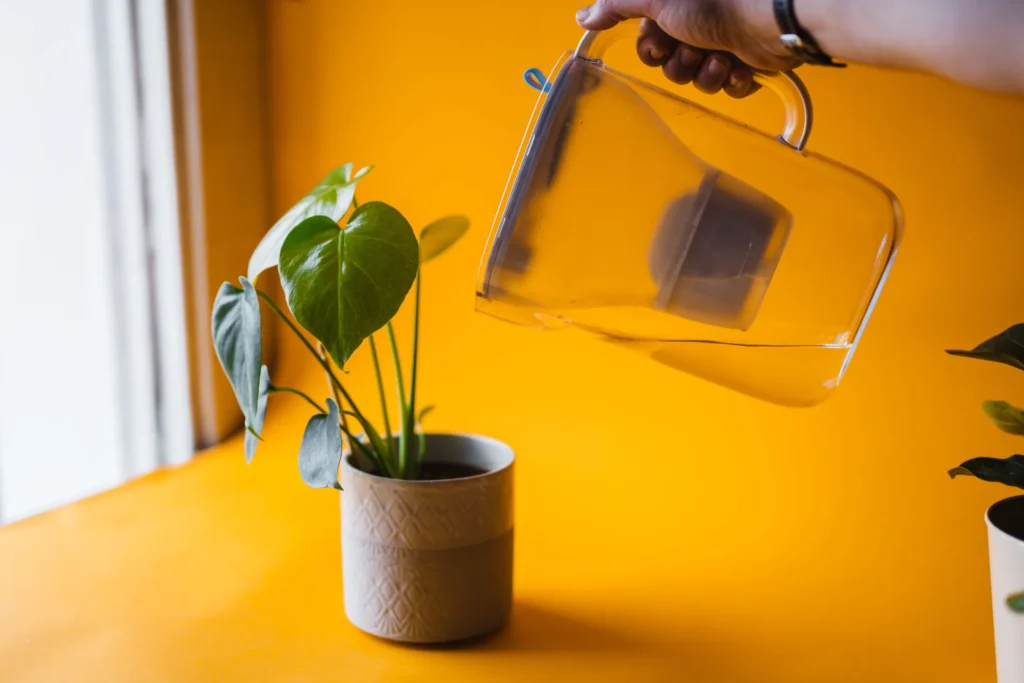
Most easy-care houseplants fail because the pot stays wet, not because the owner skipped one day. Use containers with drainage, check the soil before watering, and expect slower drying in winter or low light.
Match the Plant to Your Routine
If you want long gaps between watering, choose Snake Plant, ZZ Plant, Jade, or Aloe. If you enjoy pruning and propagation, Golden Pothos may feel more rewarding. If you want a plant that barely changes, choose a slower grower.
Check Pet Safety Before Placement
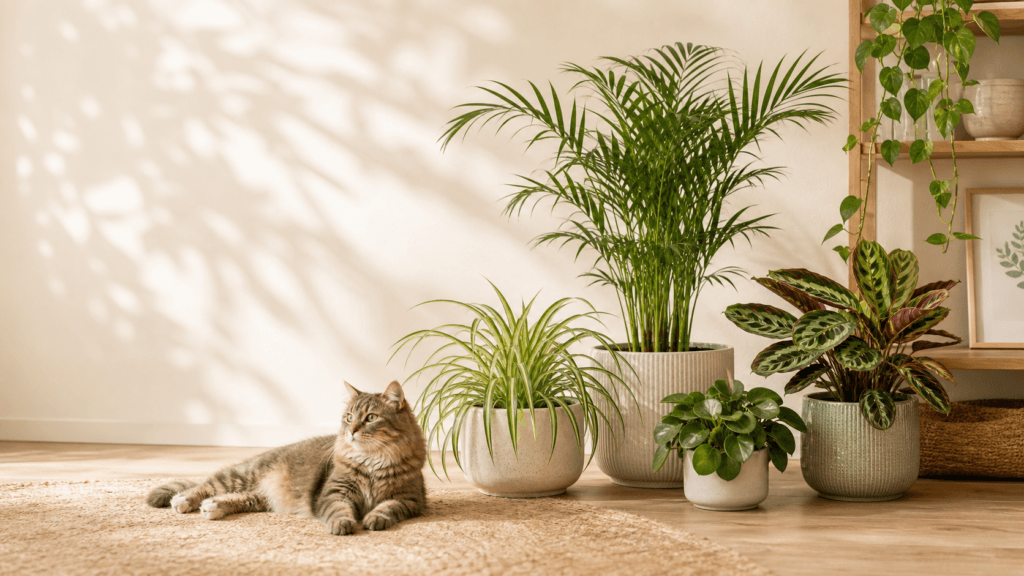
Many classic low-maintenance houseplants are not pet-safe. If animals chew plants, compare the Pet-Friendly Houseplants collection before placing a pot on the floor or a reachable shelf.
Low-Maintenance Houseplants FAQ
What makes a houseplant low maintenance?
A low-maintenance houseplant has a simpler routine, slower growth, forgiving watering needs, or tolerance for average indoor conditions. It still needs appropriate light, drainage, and occasional checks.
Which low-maintenance houseplants tolerate lower light?
Snake Plant and ZZ Plant are the strongest starting points for lower light. Golden Pothos can also tolerate softer light, although it may grow thinner and lose some variegation.
Do low-maintenance plants still need drainage holes?
Yes. Drainage is one of the main reasons these plants stay easy. A forgiving plant can still rot if water collects at the bottom of a closed decorative pot.
Are low-maintenance houseplants safe for pets?
Not automatically. Snake Plant, ZZ Plant, Golden Pothos, Jade Plant, and Aloe Vera are not ideal for pets that chew. Pet safety is a separate filter from easy care.
Can I water all low-maintenance plants on the same schedule?
No. A succulent in full sun and a ZZ Plant in low light will dry at different speeds. Check the soil and the plant guide instead of using one schedule for every pot.
Need a more specific match?
Use the Plant Finder to compare light, watering, pet safety, and room conditions together.