
Plant Collection
Office Plants
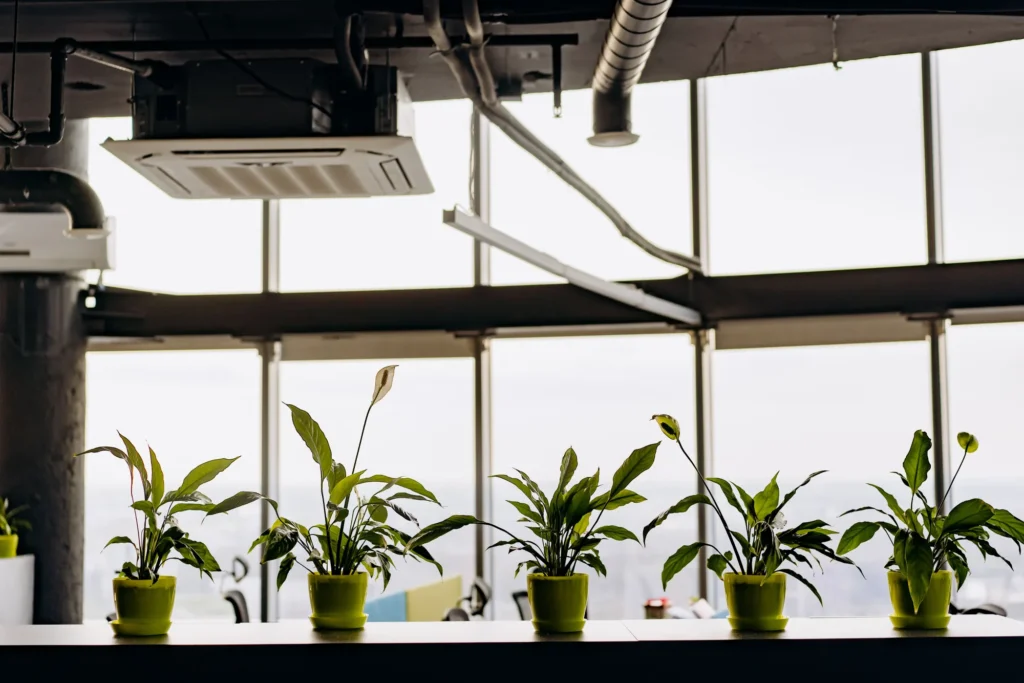
Office plants should make a workspace feel calmer without creating extra work. The best choices fit desks, shelves, file cabinets, window ledges, and home office corners. They tolerate normal indoor conditions, recover from occasional schedule changes, and do not demand messy care during the workday.
This collection focuses on office plants and office houseplants for real workspaces: home offices, shared offices, study rooms, desks near windows, and corners used for video calls. A good office houseplant should match the available light, stay within its space, and survive a routine where watering may happen before meetings, after travel, or once a week during a quick check.
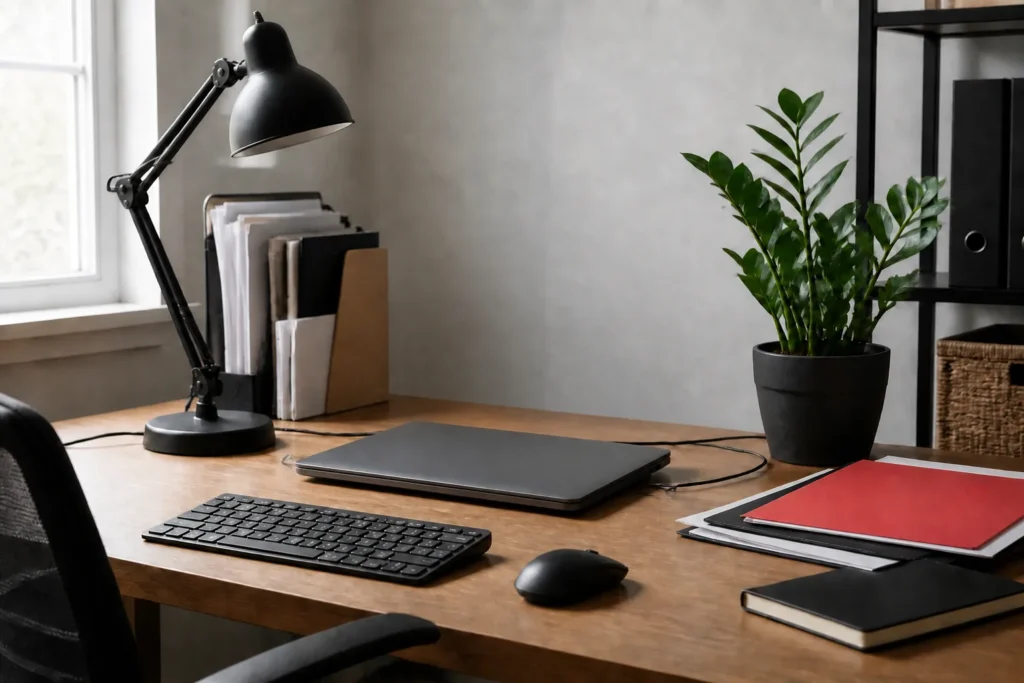
What Makes a Good Office Plant?
A good office plant is practical before it is decorative. It should not block your screen, drop leaves onto paperwork, need daily misting, or require a complicated watering setup. Compact desk plants work best for small surfaces. Upright plants work well beside a cabinet or in a corner. Trailing plants can soften shelves, but they need pruning before vines reach keyboards, pets, or walkways.
Light is the first filter. A desk beside a bright window can support very different plants from a cubicle under weak overhead lights. Office plants still need real light. If your workspace has no window, use a suitable grow light or choose a rotation plan where plants spend part of the week in brighter conditions.
Watering is the second filter. Low maintenance office plants usually prefer soil checks instead of calendar watering. A plant in a warm sunny office may dry quickly. A plant in an air-conditioned low-light office may stay wet for much longer.
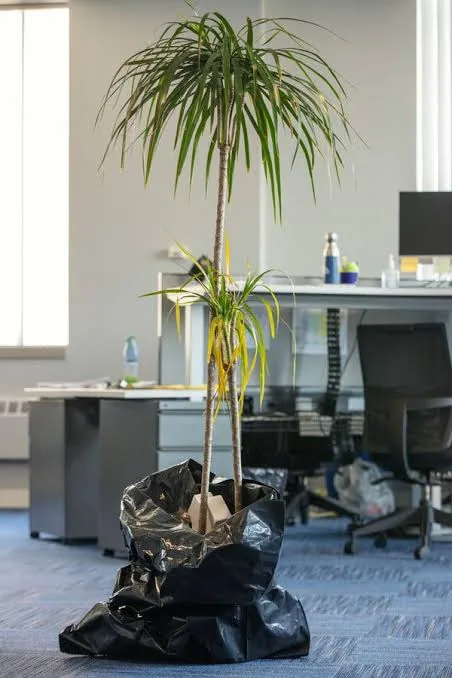
5 Office Plants to Start With
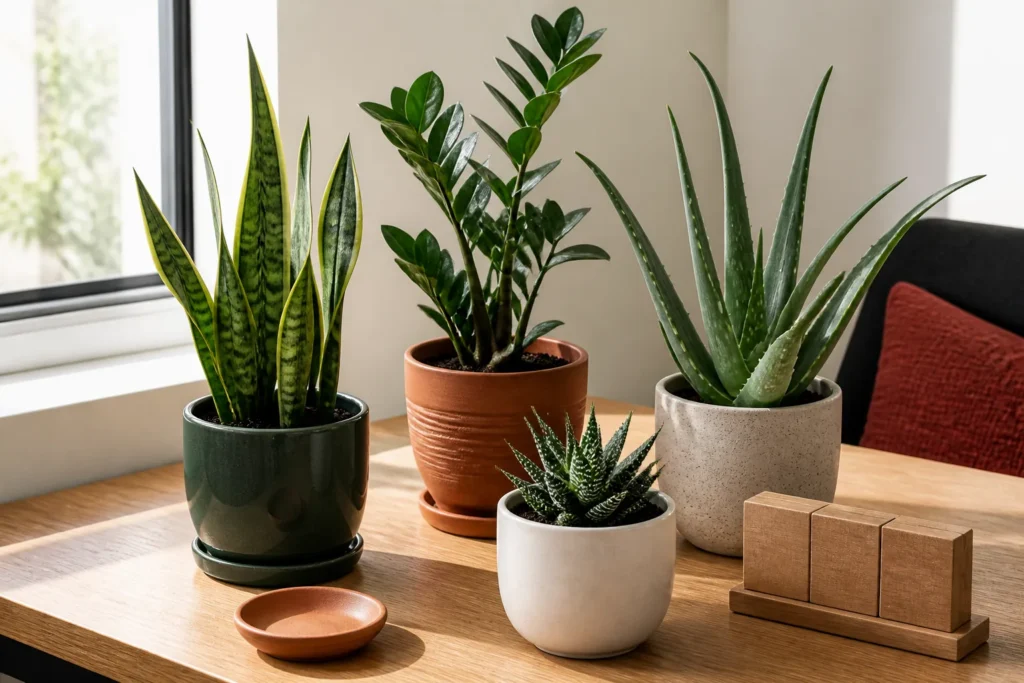
These five office plants cover the most useful workplace roles: a tough upright plant, a glossy low-light plant, a compact pet-safe desk plant, a hanging or shelf plant, and a small sculptural succulent. Together, they give you a practical starting set of office houseplants rather than a list chosen only for decoration.
1. ZZ Plant
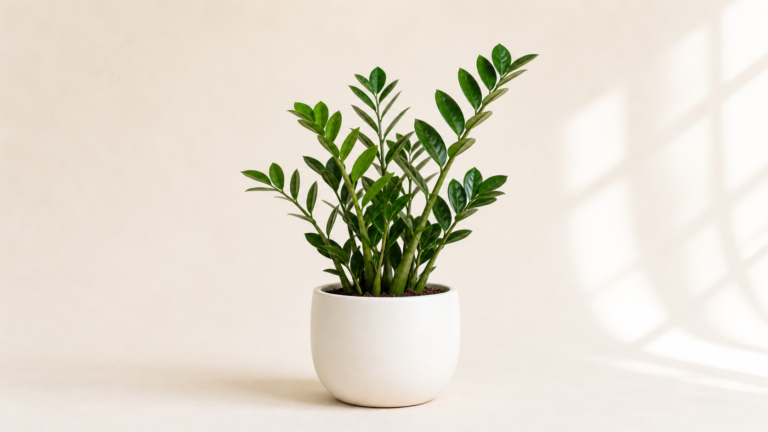
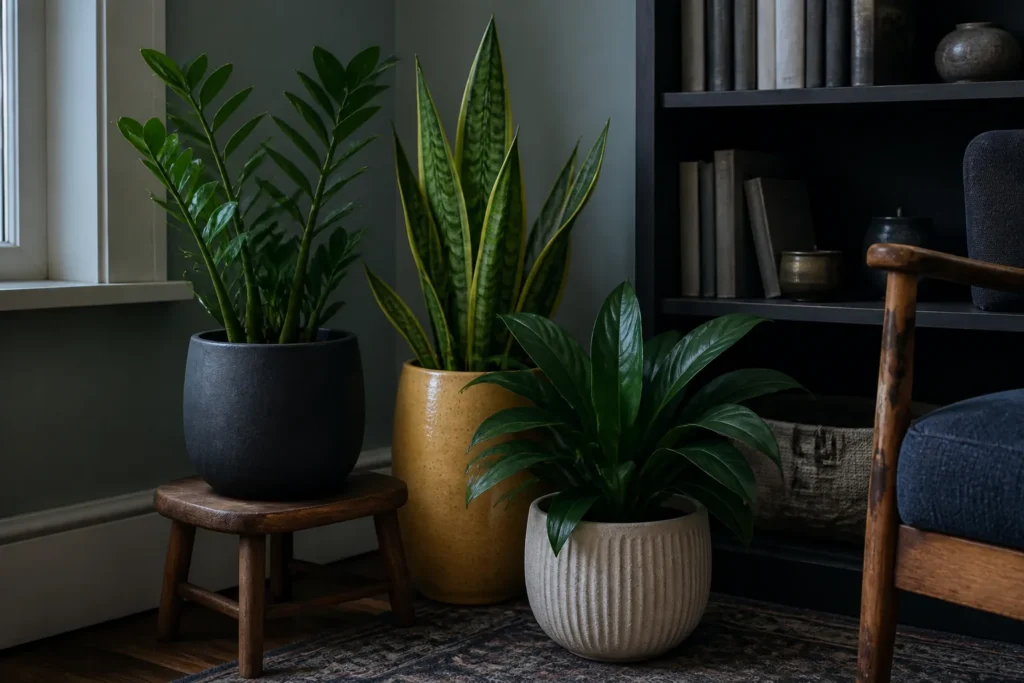
ZZ Plant is one of the strongest office houseplants for people who want a clean look and a forgiving routine. It has glossy upright leaf stems, handles lower indoor light, and stores water in rhizomes below the soil.
Use ZZ Plant for a cabinet, side table, reception corner, or home office shelf with ambient daylight. Let the potting mix dry substantially before watering. In a dim or air-conditioned room, this may take longer than expected, so check the soil rather than watering every Monday.
ZZ Plant is low maintenance, but it is not pet-safe. In a home office with cats or dogs, place it behind a closed door or choose a pet-friendly alternative.
2. Snake Plant
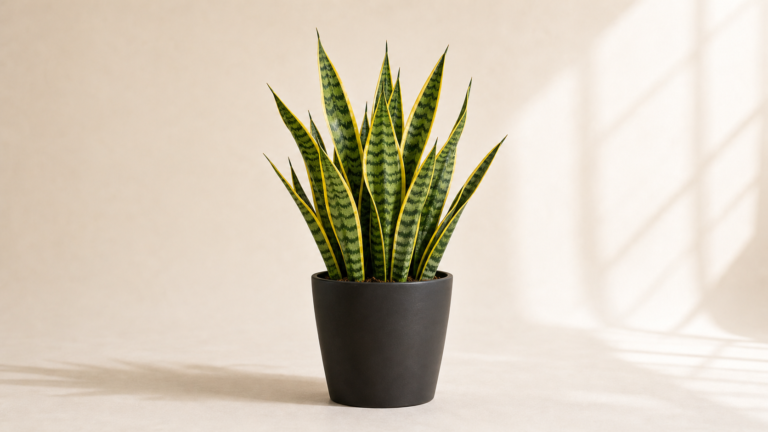
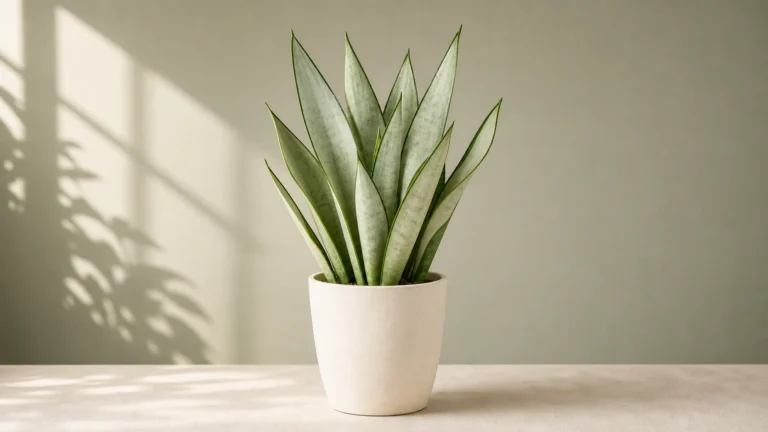
Snake Plant Laurentii works well in offices because it grows upright instead of spreading across a work surface. Its tall leaves add structure behind a desk, near a printer station, or beside a bookshelf.
This plant tolerates low to bright indirect light and does not need frequent watering. Let the soil dry thoroughly, then water deeply and drain the pot. Brighter indirect light keeps the yellow margins stronger, while lower light slows growth and water use.
Choose Snake Plant when you need a hard-to-kill houseplant with a narrow footprint. Avoid it in pet-accessible home offices because it is not pet-safe if chewed.
3. Money Tree
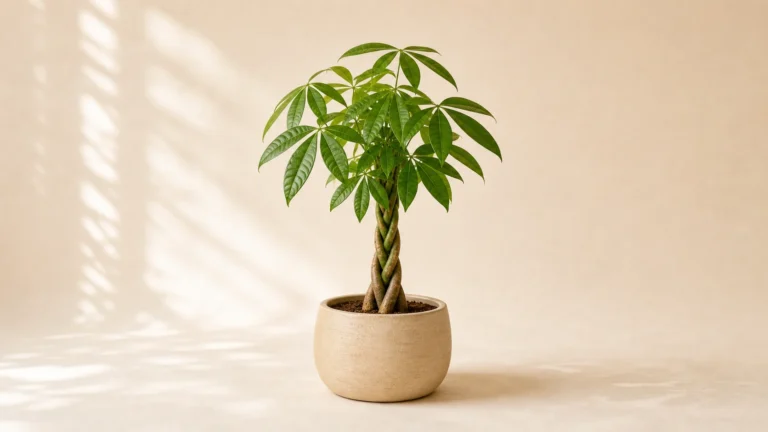
Money Tree is a good office plant when you want height, soft structure, and a polished video-call background without using a huge statement plant. Its hand-shaped leaves and often-braided trunks make it feel more intentional than a small desk pot.
Give Money Tree bright indirect light near an east, south, or west window with filtered sun. Water when the upper layer of mix has dried, then drain well. It dislikes stagnant wet soil, hidden saucer water, cold drafts, and repeated moves around the room.
This plant suits home offices, reception corners, side tables, and workspaces where a compact tree shape is more useful than another small desk plant. It is also pet-safe, although chewing and digging should still be discouraged.
4. Spider Plant ‘Bonnie’
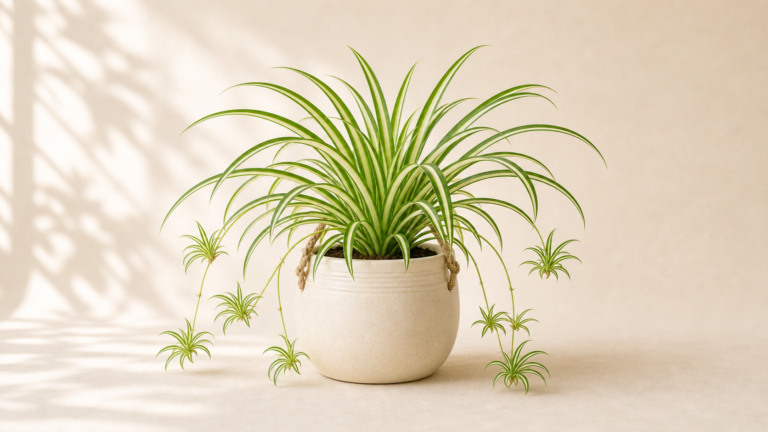
Spider Plant ‘Bonnie’ brings movement to an office shelf or hanging planter. Its curled striped leaves and plantlets make a workspace feel more alive, while the care routine remains approachable for beginners.
Place Spider Plant in bright indirect or medium light. Water when the upper soil has dried, then drain well. It may need more regular checks than Snake Plant or ZZ Plant, but it is easy to read: limp leaves, brown tips, and fewer plantlets all tell you something about light, water, or room stress.
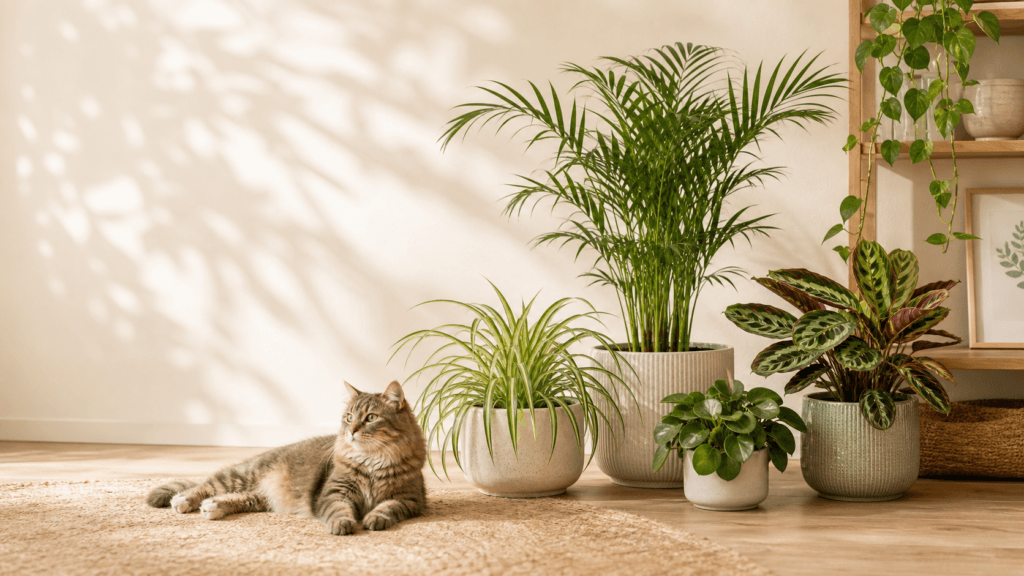
Spider Plant is also pet-safe, which makes it useful for home offices where cats or dogs wander through. A hanging position can protect both the plant and the workspace.
5. Zebra Haworthia
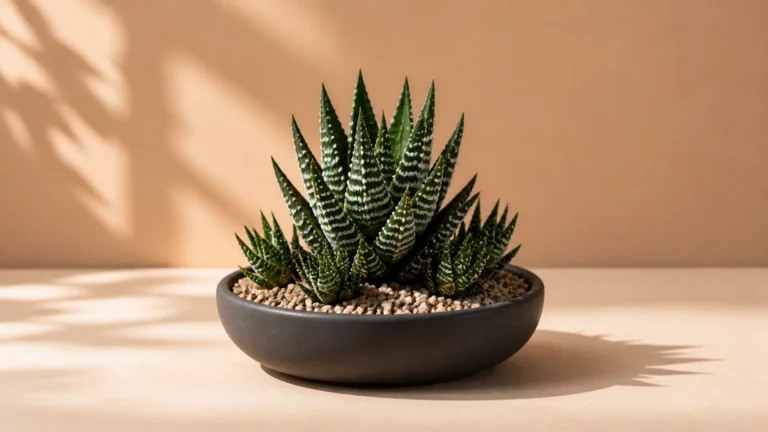
Zebra Haworthia is a small sculptural succulent for desks, windowsills, and shelves. Unlike many succulents, it can tolerate medium and softer light better, though it still looks best with useful indirect light or gentle sun.
Use a small draining pot and let the soil dry completely before watering. This plant dislikes wet roots far more than a missed watering. Its compact size makes it easy to keep beside a monitor, notebook, or task lamp without crowding the surface.
Zebra Haworthia is a good office plant when you want something architectural but not large. It is also a better pet-safe succulent choice than Aloe or Jade.
Browse More Office Plants
The plants below are assigned to the Home Office room-type taxonomy. Browse the full group, then open each Plant guide to compare light, watering, pet safety, mature size, and care level.
-

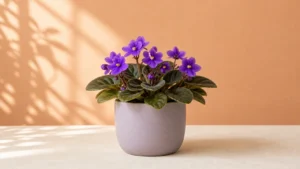
African Violet African Violet
Streptocarpus ionanthus
A compact flowering houseplant with soft fuzzy leaves and colorful blooms that prefers bright indirect light, steady moisture, and gentle indoor conditions.
-
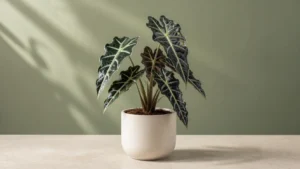
Alocasia Polly Alocasia Polly
Alocasia × amazonica 'Polly'
A compact Alocasia with dramatic dark arrow-shaped leaves and silver-white veins — a statement plant that rewards consistent humidity and steady hands.
-
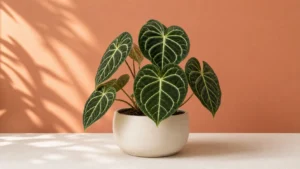
Anthurium Clarinervium Anthurium Clarinervium
Anthurium clarinervium
A compact foliage anthurium with thick, velvet-green heart-shaped leaves traced by bold pale veins.
-
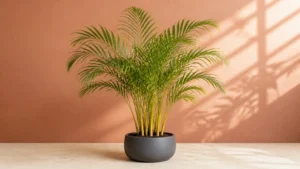
Areca Palm Areca Palm
Chrysalidocarpus lutescens
A graceful, feathery palm for bright rooms; the ASPCA lists it as non-toxic to cats and dogs.
-
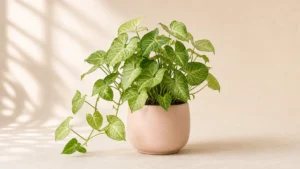
Arrowhead Plant Arrowhead Plant
Syngonium podophyllum
A fast-growing tropical vine with arrow-shaped juvenile leaves that can trail, climb, or stay bushy with regular pruning; this page covers the classic all-green species form.
-
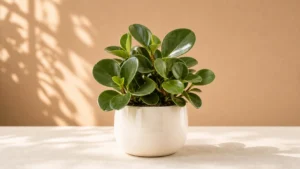
Baby Rubber Plant Baby Rubber Plant
Peperomia obtusifolia
A compact Baby Rubber Plant with thick glossy leaves, a forgiving growth habit, and verified non-toxic status for cats and dogs.
-
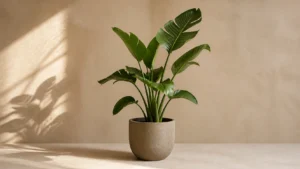
Bird of Paradise Bird of Paradise
Strelitzia nicolai
A large tropical statement plant with upright stalks and broad paddle-shaped leaves that needs very bright indoor light and generous space.
-
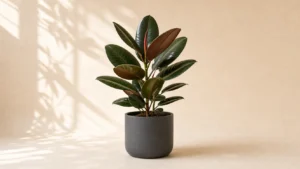
Burgundy Rubber Plant Burgundy Rubber Plant
Ficus elastica 'Burgundy'
A dark-leaved Ficus elastica selection with near-black green foliage, deep red new growth, and vivid red sheaths, often sold as Black Prince or Abidjan.
-
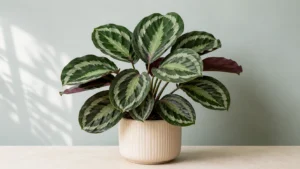
Calathea Medallion Calathea Medallion
Goeppertia roseopicta 'Medallion'
A showy Brazilian prayer plant with round leaves painted in a feathered medallion of green, silver, and pink, with deep purple undersides.
-
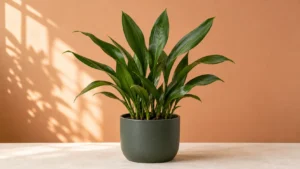
Cast Iron Plant Cast Iron Plant
Aspidistra elatior
A slow-growing, shade-tolerant plant with upright leathery leaves, valued for handling ordinary rooms without demanding constant attention.
-
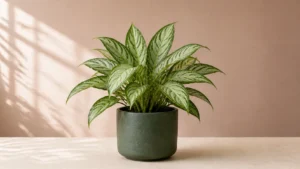
Chinese Evergreen Chinese Evergreen
Aglaonema spp.
A consumer-favorite group of Aglaonema foliage plants with green, silver, pink, or red leaves and broad tolerance for ordinary indoor light.
-
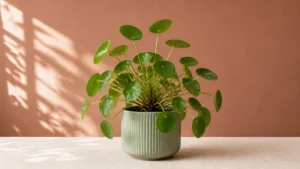
Chinese Money Plant Chinese Money Plant
Pilea peperomioides
A shareable plant with round, coin-shaped leaves; NC State lists it as non-toxic to cats and dogs.
How to Choose Office Plants
Start With the Desk or Room Position
A plant beside a sunny window has different options from a plant on a far shelf. Decide where the pot will actually sit before choosing the plant. Measure height, spread, and whether leaves will touch screens or paperwork.
Match Care to Your Work Rhythm
If you travel, forget watering, or work hybrid hours, choose plants that tolerate dry-down. If you enjoy weekly care, Spider Plant or Peperomia may feel more engaging than very slow plants.
Avoid Messy or Demanding Setups
Most offices are not ideal places for pebble trays, constant misting, heavy repotting, or plants that shed easily. Choose clean pots with drainage, stable saucers, and plants that can be maintained without disrupting work.
Check Pets, Coworkers, and Shared Space
In a home office, pet safety may be essential. In a shared workplace, avoid plants that block walkways, trigger sensitivity concerns, or require other people to maintain them while you are away.
Office Plants FAQ
What is the best plant for an office desk?
Peperomia Obtusifolia, Spider Plant ‘Bonnie’, and Zebra Haworthia are strong desk choices because they stay compact. The best option depends on light and whether pets can reach the desk.
Can office plants survive without windows?
Not reliably without a suitable grow light. Office plants need usable light. Overhead room lighting is often designed for people, not plant growth.
What office plant needs the least watering?
ZZ Plant, Snake Plant, and Zebra Haworthia usually allow longer dry-down periods. The exact timing depends on light, pot size, temperature, and season.
Are office plants good for air quality?
Grow office plants for mood, texture, and a better-looking workspace, not as a replacement for ventilation or filtration. A few potted plants will not meaningfully clean the air in a normal room.
Which office plants are pet-friendly?
Peperomia Obtusifolia, Spider Plant ‘Bonnie’, and Zebra Haworthia are better starting points for pet-friendly home offices. Always confirm the individual Plant guide and keep heavy chewers away from pots.
Need a more specific match?
Use the Plant Finder to compare light, watering, pet safety, and room conditions together.