
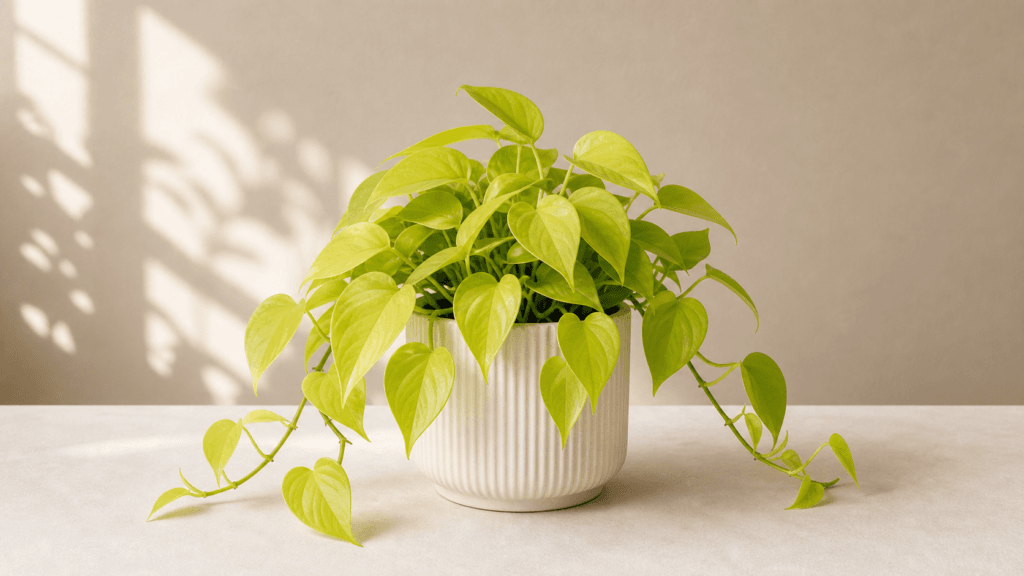
Philodendron ‘Lemon Lime’
Philodendron hederaceum 'Lemon Lime'
A fast-growing vining philodendron with glowing chartreuse leaves that brightens any shelf — and turns darker green if it doesn't get enough light.
Watering frequency
Every 7-10 days
Ideal temperature
65-85°F / 18-29°C
Humidity
40-60%
Care difficulty
Easy
Air purifying
Yes
Growth rate
Fast
Plant size
Trails 3-6 ft / 0.9-1.8 m
Soil type
Loose, well-draining aroid mix
Fertilizer need
Monthly, spring-summer.
Care summary
- Light: Bright indirect light is essential for the lime color.
- Water: Let the top inch of soil dry, then water thoroughly and drain.
- Soil: Loose aroid mix with perlite or bark.
- Growth: Vining and fast; trail or climb with support.
- Care: Prune to keep full; cuttings root easily.
- Safety: Not pet-safe; toxic if chewed.
Common problems
- Leaves turning dark green: not enough light — the neon color needs bright indirect light.
- Leggy stems with wide gaps: low light.
- Yellow leaves: overwatering or poor drainage.
- Brown tips: dry air or irregular watering.
- Spider mites or mealybugs: stress from dry air or inconsistent care.
Plant care guide
About Philodendron 'Lemon Lime'
Philodendron 'Lemon Lime' is a vining cultivar of the Heartleaf Philodendron (Philodendron hederaceum), selected for leaves in a vivid, glowing chartreuse — the color of a freshly squeezed lime. NC State Extension includes 'Lemon Lime' among the cultivars of P. hederaceum. Where the standard heartleaf is deep green, 'Lemon Lime' is almost neon. It keeps the parent's climbing or trailing habit while adding a color response that makes light placement more important.
It is easy to confuse with several other lime-colored plants. Philodendron 'Moonlight' is a self-heading type with no vines, while this 'Lemon Lime' trails and climbs. Neon Pothos looks strikingly similar at a glance, but it is a different genus (Epipremnum). A more confusing market-name overlap is Philodendron 'Malay Gold', which may be sold as Golden Goddess or Upright Lemon Lime Philodendron. Malay Gold has longer oval leaves and a bushier, upright young habit before its main stem lengthens; this page covers the thinner, heart-shaped, continuously vining P. hederaceum cultivar. The word Upright and the mature leaf shape are therefore useful checks when a nursery label says "Lemon Lime."
This page covers the cultivar specifically. For the full species guide — light, watering, soil, propagation, and troubleshooting — see the Heartleaf Philodendron care guide.
Why You'll Like It
'Lemon Lime' is the easiest way to add an actual color accent to a room. Most houseplants are green; this one is lime-yellow-green, and the color reads from across the room. It is also one of the fastest growers among philodendrons, so a modest cutting becomes a full, trailing plant within a season.
And it is genuinely low-effort. Give it bright indirect light, water when the top inch of soil dries, and it does the rest — trailing from a shelf, climbing a moss pole, or filling a hanging basket. For the same easy vining habit with a different look, Golden Pothos or Neon Pothos are close comparisons.
What Kind of Plant Is It?
Three traits define how 'Lemon Lime' behaves.
- It is a vining aroid. Stems lengthen continuously, rooting at nodes where they touch soil or moss. It trails naturally and climbs enthusiastically when given support.
- Its color is light-dependent. The chartreuse comes from a chlorophyll mutation that leaves the leaves lighter. In bright light the plant compensates and the lime color glows; in low light it produces more chlorophyll and the leaves turn darker green. The color is the plant's own light meter.
- It grows fast and roots easily. Cuttings root in water or soil within weeks, which makes the plant both easy to multiply and easy to refresh when stems get long.
Where It Works Best
Place 'Lemon Lime' where it gets bright indirect light — a few feet from a south, east, or west window, or on a bright shelf. This is the single most important placement decision: the lime color fades toward ordinary green in anything darker than medium light. A few hours of gentle morning sun are fine, but harsh afternoon sun through glass will scorch the thin leaves.
It suits living rooms, home offices, and kitchens — anywhere warm with decent light. Trailing from a high shelf or bookcase shows off the color best. Avoid cold drafts and dark corners.
How to Care for Philodendron 'Lemon Lime'
Watering: Water when the top inch of soil feels dry — usually every 7-10 days — then water thoroughly and let the excess drain. The plant is forgiving but dislikes extremes: a soggy pot causes yellow leaves, and a bone-dry pot makes the leaves droop and the tips brown. The watering guide explains how to judge the soil by touch.
Light: Bright indirect light keeps the lime color vivid and the growth compact. In medium light the plant survives but the color deepens to green and stems stretch; in low light it becomes leggy and dull. If your spot is dim, this cultivar will not stay lime — consider a standard Heartleaf Philodendron instead, which keeps its color in lower light.
Soil: Use a loose, well-draining aroid mix — standard potting soil with perlite and a little orchid bark. Drainage holes are essential; aroids rot quickly in waterlogged soil. The soil guide explains why this airy structure matters.
Temperature: Comfortable household temperatures of 65-85°F (18-29°C) suit it well. Keep it away from cold drafts, heat vents, and winter windows.
Humidity: Average indoor humidity is fine, and higher humidity (a bright bathroom, or a humidifier nearby) keeps leaf edges clean. This is not a demanding plant on humidity, but very dry air will brown the tips.
Fertilizer: Feed monthly in spring and summer with a balanced houseplant fertilizer at half strength. It is a fast grower and uses the food, but reduce feeding in winter when growth slows. The fertilizing guide covers the basics.
Pruning: Cut back long, bare vines to encourage branching — each cut node usually pushes two new stems. Pruned sections root easily, so nothing is wasted.
How to Propagate
Stem cuttings are nearly foolproof. Cut a vine just below a node, remove the bottom leaf, and set the cutting in water or directly into moist soil. Roots form within two to three weeks in water; once they reach an inch or so, pot the cutting up in fresh mix. Because the lime color is a stable cultivar trait, every cutting grows up looking like the parent — no variegation roulette. Take several cuttings at once in spring or early summer for the fastest results.
When to Repot
Repot every one to two years in spring, when roots fill the pot or growth stalls. Move up one pot size — 1-2 inches wider — and use fresh, loose aroid mix. The plant tolerates repotting well and often responds with a flush of new growth. The repotting guide walks through the process.
Use root condition rather than the calendar as the deciding signal. Repot when roots densely circle the container, the mix has collapsed, or water no longer moves through evenly. Slow growth by itself may reflect winter, weak light, pests, or a damaged root system. An oversized pot can keep unused mix wet and increase rot risk.
Training and Keeping the Plant Full
Let 'Lemon Lime' trail for a relaxed shelf display, or guide it upward on a plank, trellis, or moss pole. Climbing supports the plant's natural habit and can encourage larger leaves. Attach the main stem loosely; tying a petiole can damage the leaf and does not secure the growing vine.
Long bare stems do not refill automatically. Improve light first, then cut a healthy stem above a node on the parent. Root several cuttings and plant them around the crown. Layering a node into the pot while it remains attached is a low-risk way to add roots before making a cut.
Clean leaves gently with water and a soft cloth. Remove only fully yellow or badly damaged foliage. Commercial leaf-shine products may leave residue and make pest monitoring harder.
Seasonal Care
Spring and early summer usually produce the strongest growth. Resume light feeding only after growth begins, install support before vines become tangled, and repot if root signals justify it. Increase light gradually as the sun angle changes.
In summer, monitor warm windows for scorch and check the root zone more often. Higher temperature and longer days may shorten the watering interval, but never water solely because a week has passed. Inspect tender new leaves for thrips, mites, and mealybugs.
Autumn brings slower growth and longer dry-down. Reduce fertilizer first. In winter, move the plant to the brightest safe filtered position, keep roots away from cold glass, and lengthen the watering interval as needed. Do not fertilize in an attempt to restore lime color when light is inadequate.
Choosing and Acclimating a Healthy Plant
Confirm that the plant has a vining stem with heart-shaped leaves. The self-heading Philodendron 'Moonlight' and Neon Pothos may share a color family but have different identities. Reliable labels and stem habit are more useful than color alone.
Choose firm nodes, balanced green-chartreuse leaves, and clean new growth. Inspect leaf undersides and petiole joints for webbing, cottony residue, scale, or silvery scarring. Avoid a plant whose stems are soft at soil level or whose pot smells sour.
Quarantine a new plant and let it acclimate before cosmetic repotting. Learn whether the nursery mix is dense or airy, since that determines the initial watering interval. If roots are actively rotting, prompt inspection takes priority over avoiding disturbance.
Toxicity and Pet Safety
Philodendron 'Lemon Lime' is not pet-safe. The ASPCA's philodendron guidance identifies insoluble calcium oxalates as the toxic principle and lists oral irritation, excessive drooling, vomiting, and difficulty swallowing among possible signs after chewing. Keep it out of reach of pets and children, and wash your hands after pruning.
If a pet chews the plant, remove it from reach and contact your veterinarian. For pet-friendly homes, Parlor Palm, Spider Plant 'Bonnie', or Pilea Peperomioides offer easy trailing or upright greenery without the toxicity.
Common Problems and Practical Fixes
- Leaves turning dark green: The classic 'Lemon Lime' complaint — not enough light. Move it brighter and the new growth will come back lime; older dark leaves will not reverse. The light guide helps you judge how much a room actually provides.
- Leggy stems with wide gaps: Low light. Move it brighter and prune the bare vines to encourage branching.
- Yellow leaves: Overwatering or poor drainage. Let the soil dry further between waterings and confirm the pot drains. The yellow leaves guide helps compare causes.
- Brown tips: Dry air or irregular watering. Raise humidity and steady the watering rhythm; the brown tips guide covers the diagnosis.
- Spider mites or mealybugs: Usually stress from dry air. Wipe with rubbing alcohol, raise humidity, and treat weekly with insecticidal soap. See the pest guide for the full routine.
Frequently Asked Questions
Why is my lemon lime philodendron turning dark green?
It needs more light. The chartreuse color is maintained by bright indirect light; in lower light the plant produces more chlorophyll and the leaves darken. Move it to a brighter spot — new leaves will come out lime again.
Is lemon lime philodendron the same as Moonlight philodendron?
No. 'Lemon Lime' is a vining (trailing) philodendron, while 'Moonlight' is a self-heading or upright type with no vines. Both are lime-colored, but the growth habits are different.
How much light does a lemon lime philodendron need?
Bright indirect light. It tolerates medium light but loses its lime color and grows leggy. Direct afternoon sun burns the thin leaves.
Why is my lemon lime philodendron leggy?
Not enough light. The stems stretch toward the light source. Move it brighter and prune the bare vines back — each cut encourages branching.
Is lemon lime philodendron toxic to cats and dogs?
Yes. All philodendrons contain insoluble calcium oxalate crystals and are toxic if chewed. Keep it out of reach of pets and children.
Does lemon lime philodendron need a moss pole?
It trails happily without one, but a moss pole lets it climb, and climbing philodendrons grow larger leaves. If you want bigger leaves, give it support; if you want a trailing shelf plant, let it hang.
Should I mist it?
No routine misting is required. A humidifier can help in a very dry room, but stable moisture, airflow, useful light, and healthy roots are more important than wetting the leaves.
Can I make a bare vine full again?
Improve the light, then prune back to a healthy node and root several cuttings into the pot. The old empty internodes will not grow leaves again, but new branches and cuttings can rebuild a full crown.
Final Thought
Philodendron 'Lemon Lime' is a color plant with one non-negotiable: light. Give it bright indirect light and the chartreuse glow is yours; neglect the light and it quietly turns into an ordinary green vine. Everything else — watering, soil, temperature — is standard easy-philodendron territory. Place it well, water it when the top inch dries, and prune it when it gets leggy, and this is one of the most cheerful, fastest-growing plants you will own.