Why Is My Houseplant Turning Red? Causes and When to Worry
Learn why houseplant leaves turn red or purple and how to distinguish natural pigmentation from light, temperature, nutrient, or root stress.
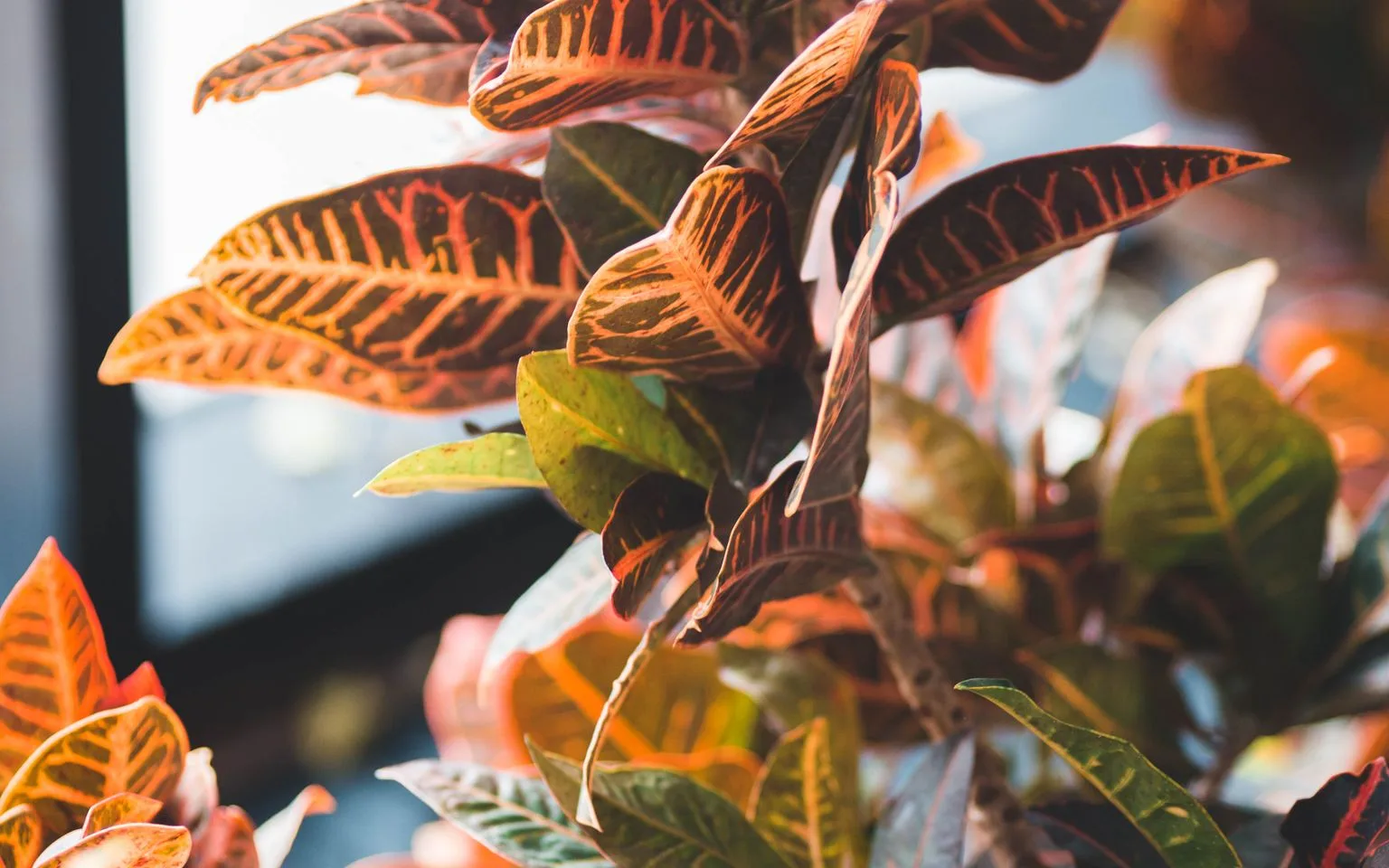
Seeing red, purple, or bronze tinting on a houseplant can be alarming — especially when the plant was green just weeks ago. Unlike yellowing, which almost always signals a problem, red or purple discoloration has a wider range of meanings. Some are completely harmless, and some need immediate attention.
The color comes from anthocyanins — water-soluble pigments that plants produce for reasons ranging from sun protection to nutrient stress. The same pigments give autumn leaves their red color and make the skin of apples and grapes red. When they appear on a houseplant, the question is not "what is this pigment" but "why is my plant producing it right now."
Here are the five most common reasons a houseplant turns red or purple, how to tell them apart, and what to do about each one.
Quick Diagnosis: Match the Color to the Cause
| Where the red appears | Most likely cause | Urgency |
|---|---|---|
| New leaves, especially on naturally red-tinted varieties | Natural pigmentation (normal) | None — no action needed |
| Leaf edges or sun-exposed sides, plant near a window | Sun stress (too much direct light) | Medium — adjust light |
| Whole plant, especially older leaves, during temperature swings | Cold stress or temperature fluctuation | Medium — stabilize temperature |
| Dark purple tinting on older leaves, slow growth | Phosphorus deficiency or pH lockout | Medium — check fertilizing |
| Red stems or leaf undersides, stunted new growth | Nutrient imbalance or root stress | Medium — inspect roots and soil |
1. Sun Stress: Too Much Direct Light
The single most common reason a green houseplant develops red or purple tinting is exposure to more direct sunlight than it is adapted to. When a plant receives intense light, it produces anthocyanins as a sunscreen — the pigments absorb excess light energy that would otherwise damage chlorophyll.
This is the same mechanism that causes succulents like Jade Plant and Aloe Vera to develop red tips in bright sun, and it is why Croton colors up best in strong indirect light. Some succulents, like Zebra Haworthia, will turn deep red almost overnight if moved from a shelf to a sunny windowsill.
Signs of Sun Stress
- Red or purple appears on the side of the plant facing the window
- Color is concentrated on leaf edges and tips
- The plant was recently moved to a brighter location
- Leaves may also look slightly bleached or crispy at the edges
What to Do
If the plant is a species that naturally tolerates lower light — such as ZZ Plant, Cast Iron Plant, or Peace Lily — move it back from the window or filter the light with a sheer curtain. The red tinting will gradually fade as the plant stops producing excess anthocyanins.
If the plant is a succulent or a light-loving species that you intentionally placed in bright sun, mild reddening is normal and not harmful. However, if the leaves look sunburned (white or brown patches), the light is too intense and you should provide some shade during peak hours.
2. Temperature Swings and Cold Stress
Plants also produce anthocyanins in response to temperature stress, particularly cool nights. A drop in temperature triggers a protective response similar to sun stress — the pigment helps cells cope with the metabolic slowdown caused by cold.
This is why outdoor-grown plants often develop vivid red coloration in autumn. Indoors, the most common trigger is a plant sitting near a cold window during winter, or an air conditioner blowing directly on the foliage.
Signs of Temperature Stress
- Red or purple tinting appears across the whole plant, not just the sun-exposed side
- The plant is located near a drafty window, AC unit, or exterior door
- Leaves may also feel slightly soft or limp
- Symptoms appeared during a season change (spring or fall)
What to Do
Check that your plant is not in the path of a direct cold air stream. Most tropical houseplants prefer temperatures between 65 and 80°F (18 and 27°C), and they dislike sudden fluctuations. Move the plant away from windows that get cold at night, and avoid placing it directly in front of an air conditioner.
If you recently moved a plant from outdoors to indoors, some reddening during the transition is normal. The plant should recover on its own once it adjusts to the indoor environment. For more on this transition, see our guide on bringing houseplants inside for winter.
3. Phosphorus Deficiency
When a plant does not have enough phosphorus, it cannot produce the energy-transfer molecules it needs for healthy growth. One of the visible symptoms is a purple or reddish tint on older leaves, often starting at the leaf margins and working inward.
Phosphorus deficiency is relatively rare in houseplants that receive regular fertilizer, but it can happen if you have not fed the plant in many months, or if the soil pH is outside the range where phosphorus is available to roots. Highly acidic or highly alkaline soil can lock out phosphorus even when it is present in the mix.
Signs of Phosphorus Deficiency
- Dark purple or reddish tint on older, lower leaves
- Slow or stunted new growth
- The plant has not been fertilized in over six months
- Soil may be very old or compacted
What to Do
If the plant has not been fertilized recently, start a regular feeding schedule with a balanced houseplant fertilizer. Our fertilizing guide covers timing, dilution, and seasonal adjustments.
If you have been fertilizing but the symptoms persist, check your soil pH. A pH that is too high or too low can prevent phosphorus uptake even when nutrients are present. See our houseplant soil pH guide for how to test and adjust.
4. Natural Pigmentation: Some Plants Are Just Red
Before diagnosing a problem, check whether your plant is supposed to have red coloring. Many popular houseplants naturally produce anthocyanins as part of their genetics:
- Croton — red, yellow, and orange variegation
- Coleus — deep red, burgundy, and magenta leaves
- Caladium — red, pink, and white patterns
- Red Anthurium — red spathes (modified leaves)
- Tradescantia Zebrina — purple undersides
Some varieties of Rubber Plant, like 'Burgundy' and 'Ruby', have naturally dark red or purple leaves. If the plant has always had red coloring and the color is uniform across the foliage, there is no problem.
How to Tell
- The red coloring has been present since you acquired the plant
- The color is consistent across all leaves, not concentrated on certain parts
- New leaves emerge with the same red color
- The plant is otherwise growing normally
If all of the above are true, the red is genetic. No action needed.
5. Root Stress and Nutrient Lockout
Sometimes red or purple discoloration is a sign that the root system is struggling. When roots are damaged by overwatering, compaction, or being root-bound, they cannot absorb nutrients efficiently — even if those nutrients are present in the soil. The result is a cascade of deficiency symptoms, and purple tinting is one of them.
This is the least obvious cause because it mimics other problems, but it should be on your radar if the plant also shows signs of root trouble.
Signs of Root-Related Redness
- Red or purple tinting accompanied by yellowing leaves
- Soil stays wet for a long time or smells sour
- The plant is in the same pot it came in (possibly root-bound)
- Leaves are smaller than usual or new growth is slow
What to Do
Check the roots by gently removing the plant from its pot. Healthy roots are firm and white or light tan. If they are brown, mushy, or smell bad, you may be dealing with root rot. If the roots are densely circling the pot, the plant needs to be repotted. See our repotting guide for step-by-step instructions.
If the soil is old and compacted, refreshing it with a well-draining mix can resolve nutrient lockout. See our houseplant soil guide for what makes a good potting mix.
When Not to Worry
Red or purple coloration is one of the few leaf changes that is often completely normal. Here is a quick checklist:
- The plant is a known red or purple variety → normal
- A succulent developed red tips after being placed in brighter light → normal (mild sun stress)
- The plant was recently moved and is adjusting → temporary, should resolve
- Only a few older leaves are affected and the rest of the plant looks healthy → likely natural aging
When to Take Action
- The red appeared suddenly and the plant was previously fully green → investigate light and temperature
- The red is accompanied by other symptoms (yellowing, wilting, soft stems) → check roots and watering
- The plant has not been fertilized in over six months → start feeding
- The soil is over a year old → consider refreshing
Summary
| Cause | Key Sign | Action |
|---|---|---|
| Sun stress | Red on sun-exposed side | Adjust light position |
| Temperature stress | Whole-plant tinting near cold source | Move away from drafts |
| Phosphorus deficiency | Purple on older leaves, slow growth | Fertilize and check pH |
| Natural pigmentation | Consistent red since acquisition | None — normal |
| Root stress | Red + yellow, wet soil, mushy roots | Inspect and repot |
The key takeaway: red is not always a red flag. Identify where the color is, when it appeared, and whether other symptoms are present. Most cases resolve with a simple light or temperature adjustment.